Bürgerpark, Park in Geestemünde, Bremerhaven, Germany
Bürgerpark is a 64-hectare green space behind the main train station combining natural woodlands, meadows, and designed garden areas throughout its layout. Walking paths connect all sections, allowing visitors to move freely between different zones.
The Geestemünder Waldverein was founded on 12 December 1899 on the initiative of educator Johann Ganten, H. Brünjes and Johann Wichels, after mayor Wilhelm Klußmann called a meeting. The association bought and expropriated the land until it owned the whole site in 1906. A plan by Harburg engineer Hoff was built for 200,000 marks, and the park opened on 1 June 1908.
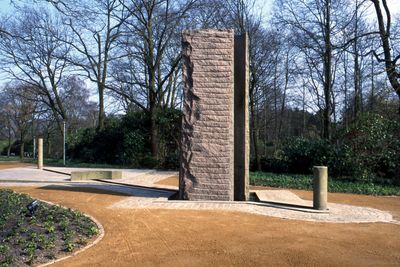
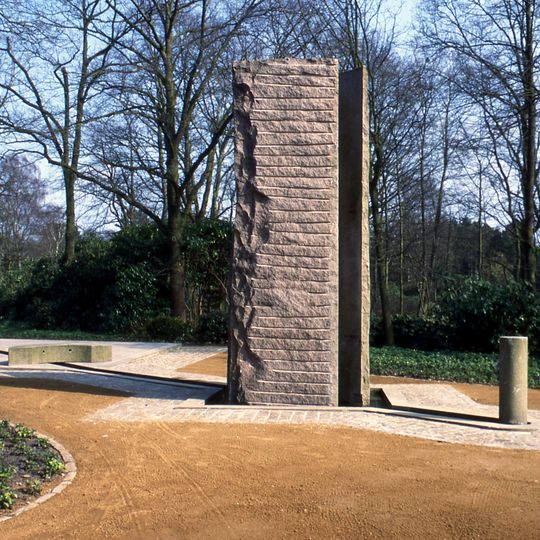
In the western part of the park, a granite sculpture by Emilia Kaus from the 1981 sculptors' symposium shows a crouching figure absorbed in contemplation. Near the Kammerweg entrance stands the Kaiser-Eiche, planted in 1913 for Kaiser Wilhelm II's 25th jubilee, with an iron grille and a boulder inscribed "Kaiser-Eiche von 1913 für Kaiser Wilhelm II." A stone memorial carved by Valeria Gramatzki in 1955 commemorates mothers and children who died in World War II.
The park lies a few minutes' walk behind the main station, with the playground next to the large meadow in the south-east and the sculptures in the western part. Grilling is allowed only on marked barbecue spots. Sports grounds, tennis courts and athletics facilities sit along the eastern edge, and open-air events take place in summer.
The Waldschänke built in the park after its opening served as an Officers Club for American forces after World War II, returned to German hands in 1954 and operated as a hotel-restaurant until the turn of the millennium. From the 1950s to 2001 a radio transmitter also stood in the Bürgerpark.
The community of curious travelers
AroundUs brings together thousands of curated places, local tips, and hidden gems, enriched daily by 92,687 contributors worldwide.