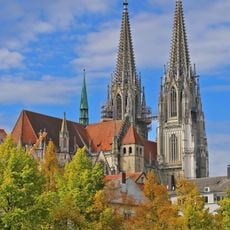
Castra Regina, Roman military fortress in Regensburg, Germany
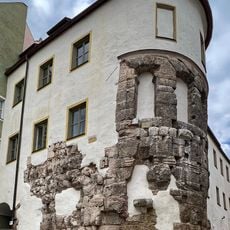
Castra Regina was the stone legionary fortress built from about 175 AD for the Legio III Italica at the northernmost bend of the Danube, in what is now central Regensburg. Its walls enclosed roughly 6,000 soldiers; a civilian settlement, cemeteries and sanctuaries lay outside the gates. In Regensburg, sections of the massive grey stone blocks are set into white plastered walls, and a rounded tower projection with two tall rectangular recesses survives.
Castra Regina was built in stone from about 175 AD for the Legio III Italica, after Emperor Marcus Aurelius decided to secure the northern frontier of Raetia with a full legion following the Marcomannic Wars. The two older auxiliary forts, Kastell Kumpfmühl and the camp by the Danube, had been destroyed around 170; their civilian settlements were absorbed into the canabae around the new camp. After the Roman withdrawal the site became the seat of the Agilolfing dukes, and from 900 under Duke Arnulf I it grew into the early medieval city that became Regensburg.
The excavated layers beneath Neupfarrplatz Square show how Roman soldiers and later medieval Jewish residents occupied the same ground over centuries. You can observe the physical traces of both communities preserved side by side.
The Document Neupfarrplatz museum displays artifacts from excavations and allows you to view the exposed Roman layers beneath the square. The museum is the main visitor point where you can learn about the site with preserved objects on display.
The camp's name appears first around 400 AD in the Notitia Dignitatum; earlier milestones of 201 AD call the site simply legio. The name Regina comes from the River Regen, which joins the Danube about a kilometre northeast of the fortress.
The community of curious travelers
AroundUs brings together thousands of curated places, local tips, and hidden gems, enriched daily by 92,685 contributors worldwide.