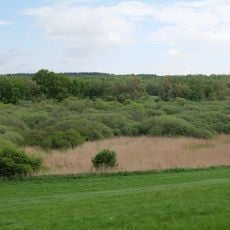
Burgwall Feldberg, Slavic hillfort on Schlossberg in Feldberger Seenlandschaft, Germany
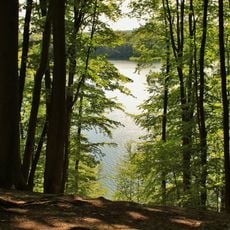
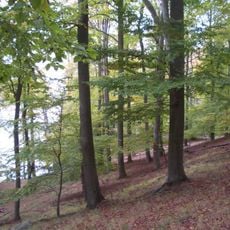
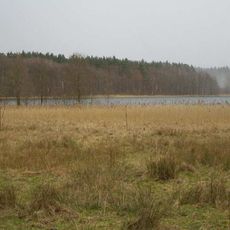
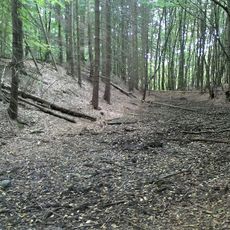
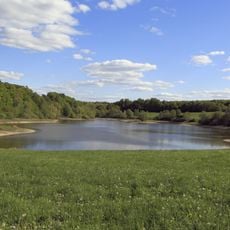
Burgwall Feldberg is a Slavic hillfort on the Schlossberg above the Breiten Luzin lake, consisting of a main castle and a bailey. The main castle occupied a plateau up to 36 metres above the water and had no rampart, only simple palisades. The bailey retains a visible earthen rampart with two gates.
The Wilzi, a Slavic tribe, built this hillfort in the 7th to 9th centuries, with space for up to 1000 people. In 1924 Carl Schuchhardt identified it as the long-sought Rethra, a hypothesis refuted by Joachim Herrmann's excavations in 1967, which showed the fort was abandoned before Rethra's time.
The pottery first identified at this hillfort gave its name to the "Feldberg Type", a classification used since for Slavic ceramics of the 7th to 9th centuries. The site belonged to the Wilzi, a Slavic tribe, and could hold up to 1000 people. The name Feldberg refers to the Schlossberg hill above the Breiten Luzin lake.
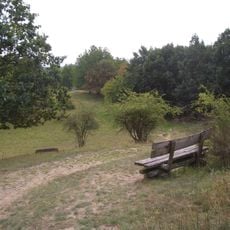
The site is accessible from May through October and offers an easy walking path up Schlossberg with clear views of the wall structures. Visitors should wear sturdy shoes since the ground is uneven and the climb can be steep in places.
The inner fortress relied on wooden palisades for protection while the outer wall was built from earth, showing two different defensive methods in one place. This combination gives visitors insight into the practical building choices of early medieval engineers.
The community of curious travelers
AroundUs brings together thousands of curated places, local tips, and hidden gems, enriched daily by 92,629 contributors worldwide.