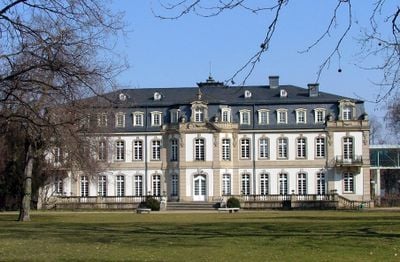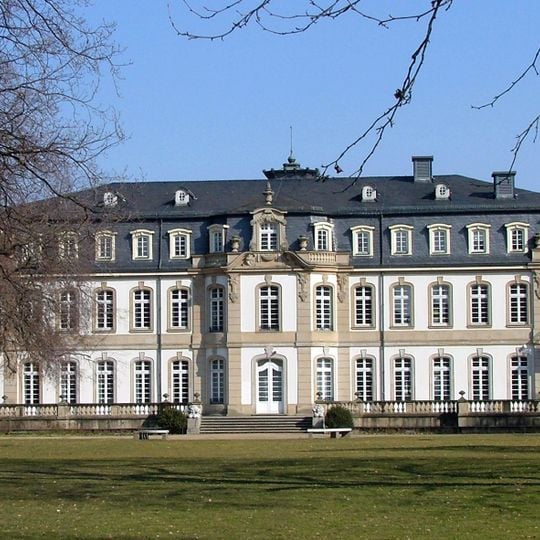
Palais de Büsing, Neo-Baroque city palace in Offenbach am Main, Germany.
Palais de Büsing is a two-story building defined by its mansard roof, ornamental stone details, and arched window frames on the facade. Two flanking pavilions connect to the main structure through single-story colonnaded passages, while stone lions decorate the stairs leading down to the garden terrace.
The building was constructed between 1775 and 1780, then underwent a major rebuilding from 1901 to 1907 when Adolf von Büsing commissioned renovations following Wilhelm Manchot's design plans. This early 20th-century transformation shaped its current appearance and role in the city.
The palace serves as a venue for municipal celebrations and civil wedding ceremonies, with its ceremonial halls reflecting its role as a place where important life moments unfold for the city's residents. These spaces remain central to how the community marks significant occasions.
The palace functions today as part of a hotel complex and contains conference spaces and event areas for various gatherings throughout the year. Access may vary depending on what events or celebrations are happening, so it helps to inquire beforehand about viewing opportunities.
The stone lions flanking the garden stairs date from the early 1900s renovation and serve as distinctive markers often overlooked by first-time visitors. These sculpted guardians are among the building's most recognizable features, yet many people walk past without noticing them at all.
The community of curious travelers
AroundUs brings together thousands of curated places, local tips, and hidden gems, enriched daily by 90,832 contributors worldwide.