Cottbuser Ostsee, Artificial lake in Lusatia, Brandenburg, Germany
Cottbuser Ostsee is a flooded former lignite open-pit mine east of Cottbus, 18.8 square kilometres in surface area and Germany's largest artificial lake. Flooding ran from 12 April 2019 to 23 December 2024, when the nominal level of 62.5 metres above sea level was reached. Most of the basin is 2.5 to 3 metres deep, with edge sections up to 30 metres; the nominal volume is 126 million cubic metres.
The Cottbus-Nord lignite mine ceased operations in late 2015, ending decades of open-pit mining in the area. After closure, the site was repurposed through a project to flood the mine pit and reclaim the land for recreational use.
The name was agreed by Cottbus city councillors on 30 May 2013, after the Inselrat, the council of the neighbouring municipalities, approved it in December 2012. It works as a pun: in German "See" is feminine for the Baltic Sea and masculine for a lake. Before flooding began, an Ostsee-Fest was already held each year, moving once around the future shoreline.
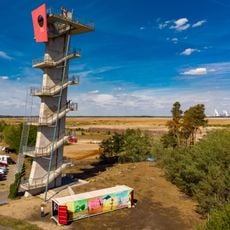
The lake can be viewed from several vantage points where you can observe its formation process. Walking paths and recreational areas are being developed around it as the project progresses.
The name is a pun: "Ostsee" normally means the Baltic Sea, but here "See" is masculine, so it means lake. The name was proposed in 1998 during a working session on developing Merzdorf and approved by the Cottbus city council on 30 May 2013.
The community of curious travelers
AroundUs brings together thousands of curated places, local tips, and hidden gems, enriched daily by 94,072 contributors worldwide.