Danevirke Museum, Archaeological museum in Dannewerk, Germany
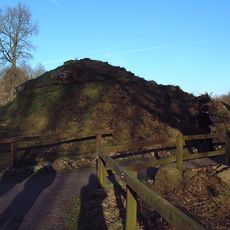
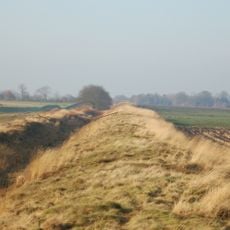
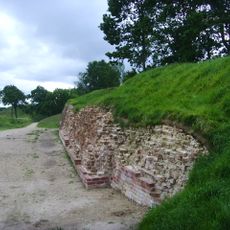
The Danevirke Museum in Dannewerk occupies a former farmhouse dated 1836 by its wall anchors, called Danevirkegården, and documents the Danewerk, a complex of Danish border fortifications built in several phases from the early Middle Ages. Its bilingual Danish and German exhibitions explain the earthworks and walls, and the grounds form an archaeological park with the main rampart, the 12th-century Valdemarsmuren and a reconstruction of a gun emplacement from the 1864 war.
The Danevirke was built in several phases from the early Middle Ages as a Danish border defence. The museum opened in 1990 in a farmhouse dated 1836 by wall anchors, called Danevirkegården. It stands where the Ochsenweg crossed the main rampart through a gate known as Wieglesdor; archaeologists found the roughly six-metre-wide passage, the Kalegat, in summer 2010. In 2018 Haithabu and the Danevirke became UNESCO World Heritage.
The museum presents bilingual exhibitions about the Danish minority in South Schleswig since 1864, illustrating the complex relationship between Danish and German communities.
The museum is accessible on foot and sits near the archaeological site itself, where you can explore the actual earthworks and walls. Sturdy shoes are recommended since the ground can be uneven.
The museum stands where the Ochsenweg crossed the main rampart, at a gate called Wieglesdor in historical sources. Archaeologists uncovered this roughly six-metre-wide passage, the Kalegat, in summer 2010 directly beside the museum; traffic on the north-south route passed through it from the 600s to the 1200s.
The community of curious travelers
AroundUs brings together thousands of curated places, local tips, and hidden gems, enriched daily by 92,651 contributors worldwide.