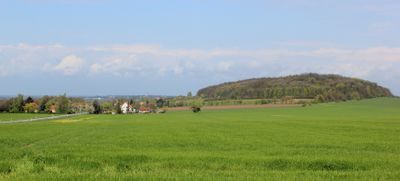
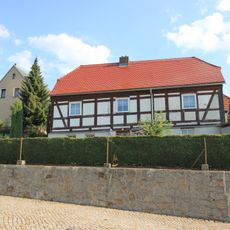
Strohmberg, Mountain summit in Bautzen District, Germany.
Strohmberg is a mountain summit in Upper Lusatia that rises to 264 meters and features multiple natural trails through varied rock formations and wooded slopes. The terrain displays diverse geological layers and exposed cliff faces along the paths.
The mountain was used for basalt mining during the industrial period, supplying important building materials to the Saxony region. This mining activity shaped the landscape and left visible traces on the terrain.
The mountain carries both German and Sorbian names, reflecting the shared heritage of Upper Lusatia where different language communities have lived together for centuries. Visitors can notice this cultural mix in the names of surrounding villages and paths.
The summit is reachable from several nearby villages, with trails of varying difficulty connecting from different starting points. Good footwear is recommended as some paths can be steep and rocky in sections.
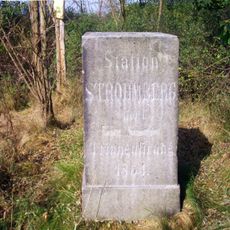
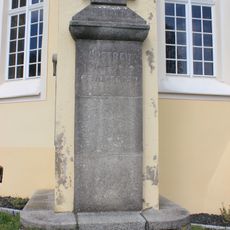
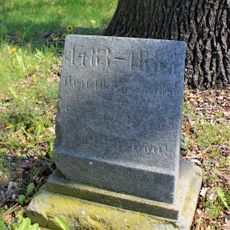
On the summit, the measuring point of the Royal Saxon triangulation (station of the second order) is still visible; a tall three-legged wooden signal once stood exactly above it for long-distance surveying. The double summit is built of nepheline basalt and stretches about one kilometre from northwest to southeast, only 400 metres wide across.
The community of curious travelers
AroundUs brings together thousands of curated places, local tips, and hidden gems, enriched daily by 92,654 contributors worldwide.