Tuch und Technik Textilmuseum Neumünster, Textile museum in Neumünster, Germany.
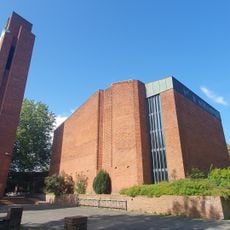
Tuch und Technik Textilmuseum Neumünster occupies a purpose-built building at Kleinflecken in central Neumünster, opened on 13 October 2007. Its permanent exhibition covers almost 2,000 square metres and gathers more than 400 objects, from sheared and washed wool to finished cloth. Several original industrial machines are kept in working order and are demonstrated on special occasions.
A municipal museum founded in 1914 bought Professor Max Kirmis's private collection of some 600 objects, including costume jewellery, silver and Stone and Bronze Age finds, and first opened in two classrooms and the corridors of the school on Holstenstraße. Under Karl Schlabow, appointed director in November 1926, it added historic looms and turned to textile archaeology, reconstructing Iron Age garments on warp-weighted looms. Bombing in 1944 destroyed the building and much of the collection; the museum reopened in 2007 in a new building at the Kleinflecken.
Neumünster's clothmakers worked in Volltuchfabriken, full-cloth factories where every step from shorn, washed wool to finished cloth happened under one roof. The museum keeps the memory of that trade alive through two student fraternities, Technische Verbindung Lanificaria and Burschenschaft Suebia, which still recall the former textile engineering school dissolved in 1978. The Förderverein Textilmuseum Neumünster, founded in 1957, expanded the collection with numerous textile machines, especially in the 1980s.
The museum stands at Kleinflecken in central Neumünster, in a building erected for it and opened in 2007. The exhibition covers almost 2,000 square metres, so allow time for more than 400 objects. Original machines run only on certain occasions, so check ahead if you want to see them in action.
The museum's textile-archaeology roots reach back to 1928, when Karl Schlabow was asked to study Iron Age textiles from Kiel's prehistoric collection. His workshop rewoven almost every Iron Age garment then known, thread by thread, on warp-weighted looms. Much of that reconstruction work was destroyed in the 1944 bombing and later recreated by Willi Schramm.
The community of curious travelers
AroundUs brings together thousands of curated places, local tips, and hidden gems, enriched daily by 94,027 contributors worldwide.