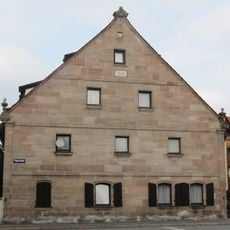
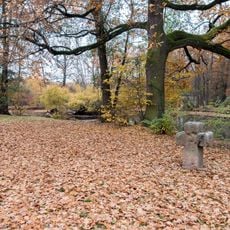
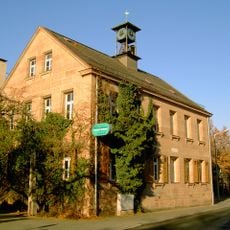
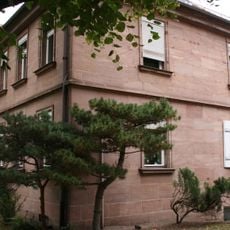
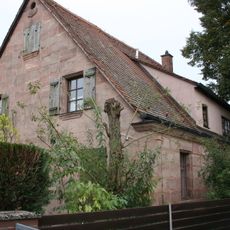
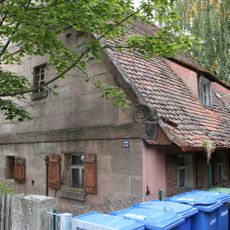
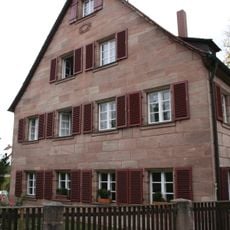
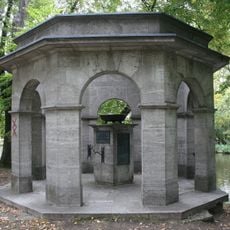
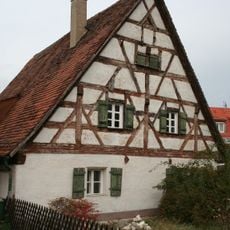
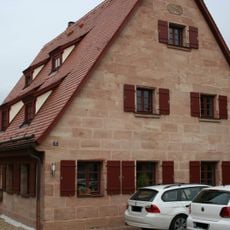
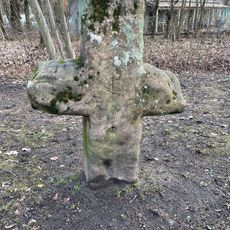
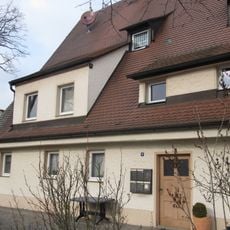
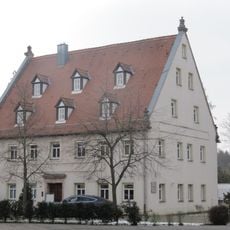
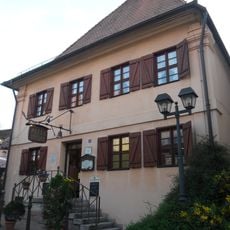
Eibach, Residential district in Nuremberg, Germany
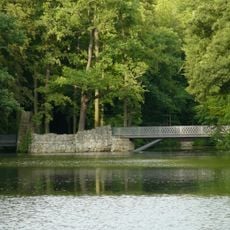
Eibach is a district in the southwest of Nuremberg, bounded by the Fürreuthweg to the north, the Treuchtlingen–Nuremberg railway to the east, the Entengraben stream to the south and the Rednitz to the west. Its built-up area lies around the Forstweiher, a pond of about 0.13 hectares formed as a small reservoir of the Schwarzer Graben.
Eibach was first documented in 1264 as "Ybach" in an inheritance renunciation, and a 1285 entry in Nuremberg's exile book also names it. Around 1300 it appeared as "Eywach", when Seitz von Eywach served as forester of the forest holding. In 1922 the municipality was incorporated into Nuremberg; its last mayor was Hans Hauenstein.
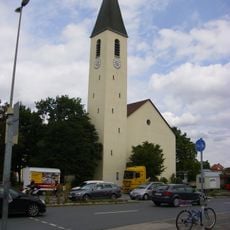
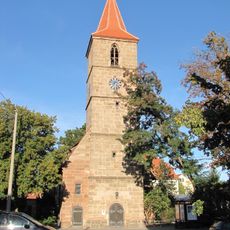
The name Eibach derives from Middle High German ībach, meaning "(ground at the) yew forest", recorded as Ybach in 1264 and Eywach around 1300. The local Franconian dialect form is Aiwa or Aiba. The parish church of St. Johannes Baptist, built in 1343, was originally a chapel of Katzwang and became its own parish in 1447.
Eibach lies in Nuremberg's southwest, bounded by the Rednitz river to the west and the Treuchtlingen–Nuremberg railway line to the east. The Forstweiher, a still pond of about 0.13 hectares fed by the Schwarzer Graben, sits within the district. The main settlement runs along the Eibacher Hauptstraße, where the church of St. Johannes Baptist stands.
Eibach's name derives from Middle High German ībach, meaning "(ground at the) yew forest", a reference to the Forsthuben established in the Reichswald around Nuremberg in the 11th and 12th centuries. The settlement was first recorded as "Ybach" in 1264 in a declaration renouncing an inheritance.
The community of curious travelers
AroundUs brings together thousands of curated places, local tips, and hidden gems, enriched daily by 93,098 contributors worldwide.