Ostkirchhof Ahrensfelde, Cemetery and architectural monument in Ahrensfelde, Germany.
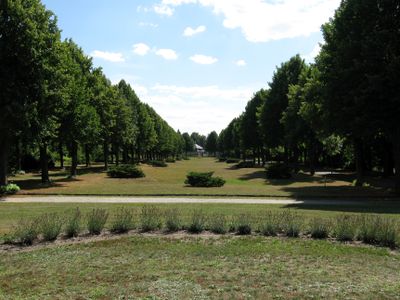
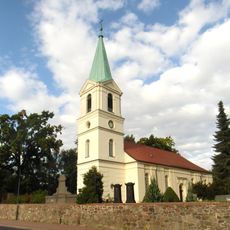
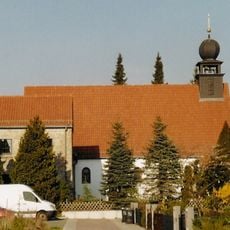
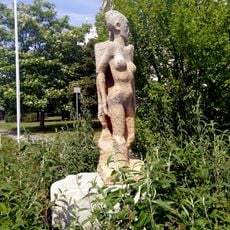
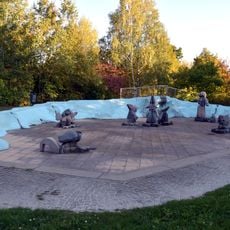
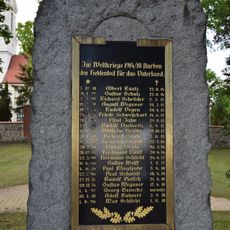
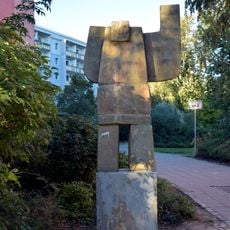
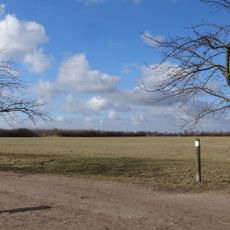
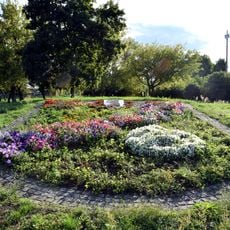
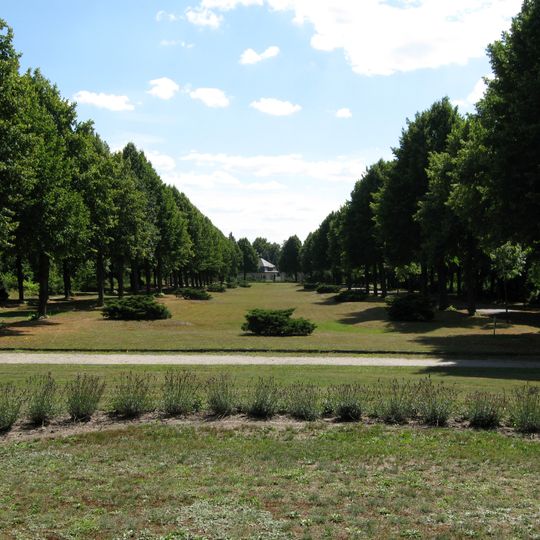
Ostkirchhof Ahrensfelde is a cemetery and architectural monument on the eastern edge of Berlin, spread across expansive grounds with an Art Nouveau chapel, memorials, and fountains. The grounds include distinct burial zones, tree-lined paths connecting different areas, and multiple buildings that serve the overall site.
The Berlin Stadtsynodalverband bought about 450 hectares near Ahrensfelde in 1906, choosing the site for its existing railway link. Architects Gustav Werner and Louis Meyer laid out the park cemetery, which opened on 30 June 1908 with a wooden chapel moved from Hohenschönhausen. The first burial, of Anna Schwarzenberg, followed on 4 July 1908.
The cemetery was divided into burial fields of about 30 Morgen (roughly 7.5 hectares) for each of the 20 Berlin congregations that first used it, later planned for 30 congregations and 30,000 graves. Graves were laid out head to head with 40 centimetres between them, and broad promenades called "Straßen" ran between the plots. The first burial, on 4 July 1908, was Anna Schwarzenberg of the Samariter congregation; her grave is kept as an honorary grave.
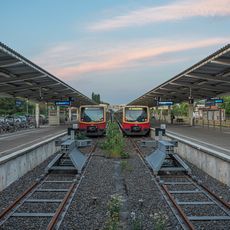
The cemetery lies outside Berlin's city boundary in Ahrensfelde and is served by the RB 25 regional train at Ahrensfelde Friedhof station on the Berlin–Wriezen line. The grounds cover 25 hectares, so allow time to walk between the individual burial fields, which are separated by broad promenades called streets.
The chapel contains an organ built by Steinmeyer, a notable craftsmanship example from that era. The memorials and landscaping show how this place developed over decades as the surrounding city transformed around it.
The community of curious travelers
AroundUs brings together thousands of curated places, local tips, and hidden gems, enriched daily by 92,812 contributors worldwide.