Schwedenhöhlen, Cave system in Reutlingendorf, Germany.
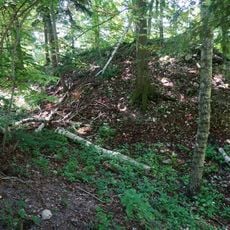
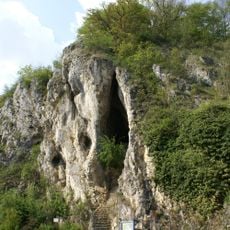
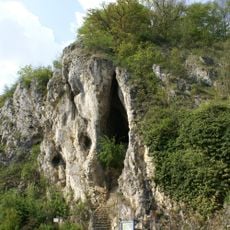
The Schwedenhöhlen are a group of originally 15 artificial caves near Reutlingendorf, carved side by side into the soft Pfohsand of the Upper Freshwater Molasse. Each cave is about ten metres long, three metres wide and two and a half metres high, with niches cut into the sides for fires. The entrances are narrow, very steep and now almost completely filled in.
The cave system served as a shelter for the regional population during the Thirty Years' War. The caverns offered refuge during decades of ongoing military conflict that swept through the area.
Locals also call the caves "Schwedenlöcher" or "Dobellöcher". The name recalls Swedish soldiers who entered the area around the Bussen in 1632, bringing plunder, fire and murder; a 1634 letter by the monastery steward Donatus to his abbot in Obermarchtal records the community's fear and their flight into the caves.
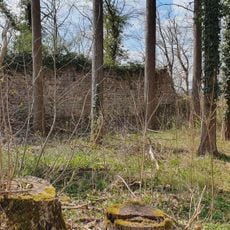
The caves lie on the Schwarzwald-Schwäbische-Alb-Allgäu-Weg and on the 12.6 km Rundweg Schwedenhöhlen loop created by Uttenweiler and Unlingen. The entrances are collapsed and the site is not developed for visitors; the two openings made accessible around 1900 have fallen into ruin again. The remains of the former Dobelburg are close by.
The caves were dug into soft Pfohsand, a sandstone of the Upper Freshwater Molasse, not dissolved from limestone. Niche-like hollows cut into the side walls served for fires. The site lies at about 614 metres on the Schwäbische Alb, roughly 4.4 km from the Bussen summit.
The community of curious travelers
AroundUs brings together thousands of curated places, local tips, and hidden gems, enriched daily by 93,679 contributors worldwide.