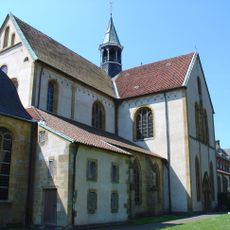
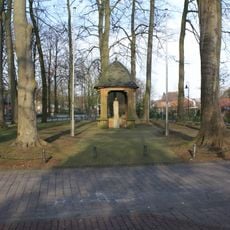
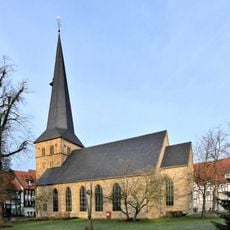
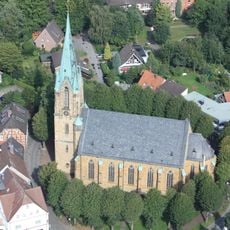
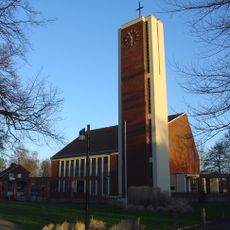
Marienfelder Altar, Religious altar in Harsewinkel, Germany
The Marienfelder Altar is composed of sixteen painted wooden panels depicting moments from the Passion of Christ and the Life of Mary. Each panel, roughly 93 by 65 centimeters, displays detailed religious scenes rendered in the style of northern European medieval painting.
Created between 1443 and 1457 by painter Johann Koerbecke for a Cistercian monastery, the altar panels originated as a major religious commission. The work was later modified and eventually displaced when Baroque tastes led to its replacement with a new altar.
The painted scenes served to teach biblical stories to monastery visitors who could not read, making sacred narratives accessible through images. This visual storytelling was a common practice in medieval religious spaces, helping people connect with the faith through what they could see.
The original panels are now held in museums around the world rather than in one location, so viewing them requires visiting multiple collections. Plan ahead to see which museums near you display parts of this work if you want to study it in person.
The panels feature intricate gold leaf details and layered landscape backgrounds that were hallmarks of northern European painting from this period. These artistic techniques create a sense of depth that rewards close examination of each scene.
The community of curious travelers
AroundUs brings together thousands of curated places, local tips, and hidden gems, enriched daily by 60,000 contributors worldwide.