Schloss Jößnitz, Medieval castle in Plauen, Germany
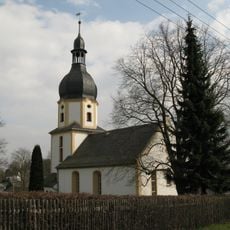
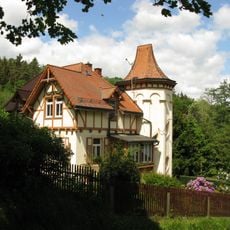
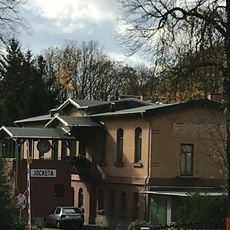
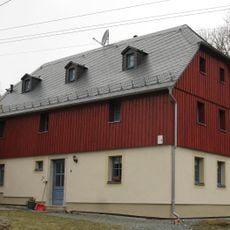
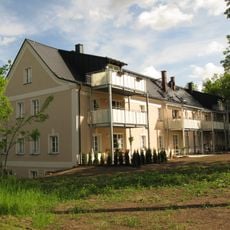
Schloss Jößnitz is a multi-storey rubble-stone building with a half-timbered upper floor and a gabled roof with a lantern and dormers. Its facade has rectangular and cross-mullioned windows and surviving arrow slits, likely enlarged in the 17th century. Beside it stands a small round tower with a Welsh dome. The main castle was demolished in 1860, and its roof turret was moved to the surviving side building.
The manor was first recorded in 1282 with Theodericus de Jezcenicz, and the knight's castle is traditionally dated to around 1320. From 1446 it belonged to the Lords of Dobeneck, and in 1563 it passed to the von Watzdorf family. Damaged by fire in the Thirty Years' War, it was rebuilt by 1643; the main building was demolished in 1860 and its roof turret moved to the surviving side wing.
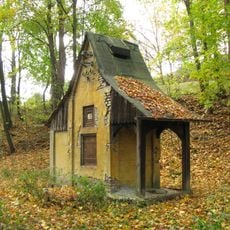
The name Jößnitz comes from Slavic origins and reflects the early settlers of this region. Today the maintained park with a pond and a Swiss-style pavilion shape how visitors experience the grounds and invite leisurely walks.
The castle now operates as a hotel and restaurant, allowing visitors to explore the rooms or dine on the premises. Annual medieval festivals with craft demonstrations and knight tournaments offer popular times to experience the grounds in a special setting.
The main castle building, with its turrets, embrasures and drawbridge, was demolished in 1860; its owner planned a replacement but died before building it. The well-preserved roof turret was then moved onto the surviving side building, which has carried a "tower" ever since.
The community of curious travelers
AroundUs brings together thousands of curated places, local tips, and hidden gems, enriched daily by 93,480 contributors worldwide.