Knappenrode energy museum, Industrial heritage museum in Hoyerswerda, Germany.
The Knappenrode energy museum is a former industrial facility in Hoyerswerda that preserves machinery and equipment used in coal processing and energy production. The site contains exhibitions explaining the technical processes that took place here and displays original equipment from its working years.
Joseph Werminghoff opened the Grube Werminghoff I open-cast mine south of Hoyerswerda from 1913, and the neighbouring briquette factory went into operation in parts from 1918 and fully by 1924. Until 1946 it counted as Germany's most modern briquette factory; from 1918 to its closure in 1993 it pressed about 67 million tonnes of briquettes. A coal-dust explosion on 16 March 1978 killed five people. The factory closed in 1993 and reopened as a museum on 18 June 1994.
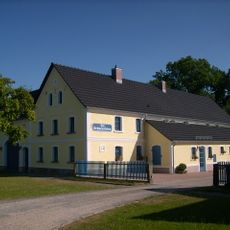
Knappenrode was a company village: the mine owner Joseph Werminghoff built housing outside the factory gates, and the company owned the houses, the store, a guest house, a community centre and the railway station. Houses had no bathrooms; families used the factory bathhouse, and retired workers returned on Saturday nights, which remained a social occasion.
The museum is open several days a week and allows visitors to explore the factory buildings and participate in guided tours. The site has amenities such as a bistro and is accessible for visitors with different mobility needs.
The site has Germany's only hand-lever draisine circuit: a 900 mm gauge loop of about 2.7 km. Visitors propel the draisines themselves along the track, and the route also passes a labyrinth and a tunnel slide.
The community of curious travelers
AroundUs brings together thousands of curated places, local tips, and hidden gems, enriched daily by 94,154 contributors worldwide.