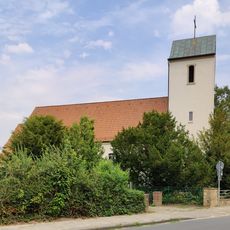
Organ in St. Cyprian-and Cornelius church, Pipe organ at Saint Cyprian and Cornelius church, Ganderkesee, Germany.
The organ at Saint Cyprian and Cornelius church contains 22 stops spread across two manuals and a pedal board. The instrument displays northern German organ-building methods with components from multiple craftsmen.
The instrument was built by Arp Schnitger in 1699 and expanded with a pedal section by Johann Hinrich Klapmeyer in 1760. A comprehensive restoration in 2005 secured it for future generations.
The organ's case was painted red in 1766, with gilded edges on its two cornices. The facade pipes, made of lead-containing metal, survived World War I because they were not requisitioned. The instrument stands on the west gallery, where it was placed when new in 1699.
Access is through the church, which is open to visitors at certain times. Concerts happen regularly and offer the best chance to hear the instrument in action.
The facade pipes are made of lead-containing metal, which is why they were not requisitioned for scrap during World War I. The organ itself was removed and stored during the war and reinstalled by Emil Hammer Orgelbau in 1946.
The community of curious travelers
AroundUs brings together thousands of curated places, local tips, and hidden gems, enriched daily by 94,980 contributors worldwide.