Schloss Tüschenbroich, Medieval castle in Wegberg, Germany.
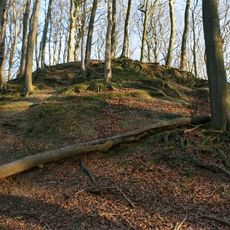
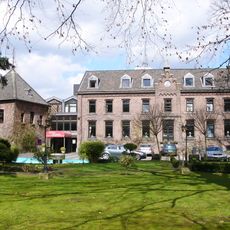
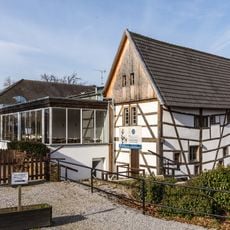
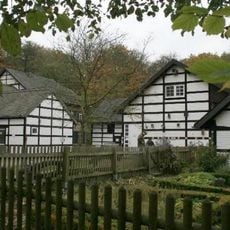
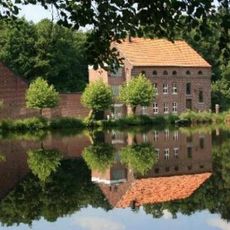
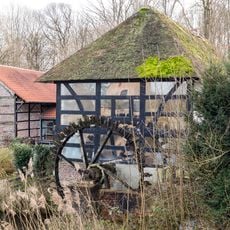
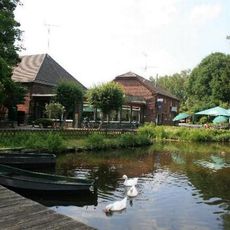
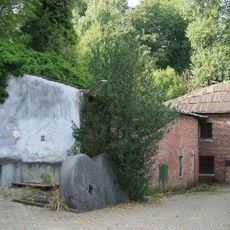
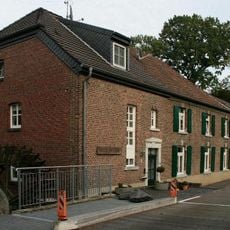
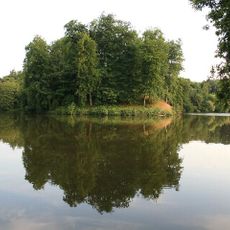
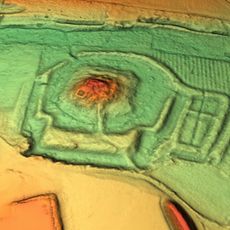
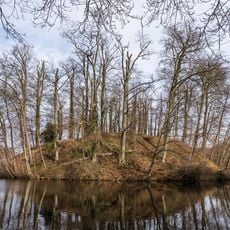
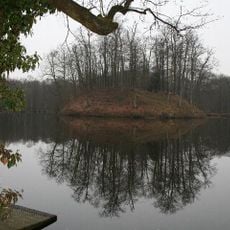
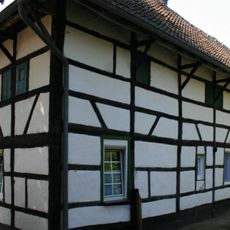
Schloss Tüschenbroich is a brick Baroque castle complex near the source of the Schwalm, about 25 km west of Mönchengladbach. Its historic core is a tree-covered motte on an island in the mill pond, while the surviving outer bailey, later used as the main castle, stands nearby. The estate also includes an 18th-century thatched timber-framed oil mill with an undershot water wheel.
The castle was first documented in 1172 under the name Thuschinbroc in written records. Following its destruction during the Thirty Years' War, Franz von Spiering rebuilt it in 1624 with Baroque design elements that still define its appearance today.
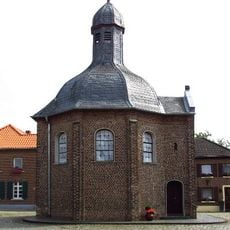
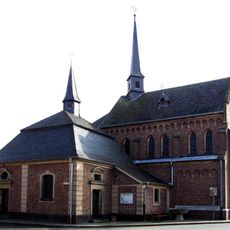
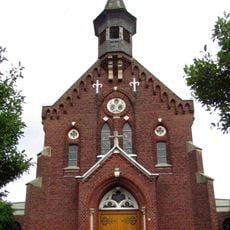
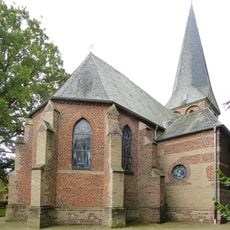
The octagonal early-Baroque St. Ulrich Chapel in the Tüschenbroich forest was built around 1640 by Herr von Spiering. Its carved Renaissance oak door, made in 1546, does not fit the basket-arched opening, and the bell was cast in 1587 by Aachen founder Heinrich von Trier. A legend tells of Count Heinrich von Melich, who condemned a robber captain to death without recognizing his own son Ulrich.
Schloss Tüschenbroich is private property, so the grounds and buildings are not open to visitors; the surrounding forest paths and the mill pond can be viewed from outside. The former oil mill, a thatched timber-framed building of the 18th century, now houses a glass art studio and is used for events. The octagonal St. Ulrich Chapel stands in the Tüschenbroich forest on the way to Geneiken.
The castle owners once held exclusive milling rights that required local farmers to grind their grain only at the property's mill until the early 1900s. This right served as a major income source and demonstrated how the castle family controlled the economic life of the surrounding area.
The community of curious travelers
AroundUs brings together thousands of curated places, local tips, and hidden gems, enriched daily by 93,940 contributors worldwide.