Volkspark Wilmersdorf, Urban park in Charlottenburg-Wilmersdorf, Germany.
Volkspark Wilmersdorf is a 12-hectare green space featuring the Fennsee lake, sports fields, walking paths, and ornamental gardens. The park extends between Uhlandstraße and Bundesallee, offering distinct areas for different types of activities.
Plans for a "Seepark" in the glacial lowland were pursued from 1899 and placed under municipal head gardener Richard Thieme in 1904. Sections were laid out in 1912/13, built up to 1920, and after redesign between 1933 and 1936. From 1917 to 1945 the park was called Hindenburgpark; the name Volkspark Wilmersdorf returned after the war.
The park was called Hindenburgpark from 1917 to 1945; the name Volkspark Wilmersdorf came into use after 1945. Its eastern section follows Richard Thieme's 1912 design in the mixed park style of the 19th century, with a landscape layout matched to the adjoining Rudolph-Wilde-Park. The Volksparksteg, a yellow pedestrian bridge over Bundesallee, has linked the eastern and central sections since 1971.
The park is split into three sections by Bundesallee and Uhlandstraße/Mecklenburgische Straße; the Volksparksteg, a pedestrian and cycle bridge over Bundesallee, links the eastern and central parts. Playgrounds, table-tennis tables and ball courts are available, and the themed Zauberspielplatz reopened in May 2024 after refurbishment. The Prinzregentenstraße crossing the eastern section must be driven at walking pace.
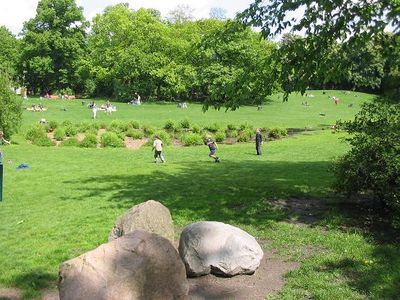
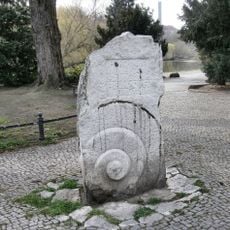
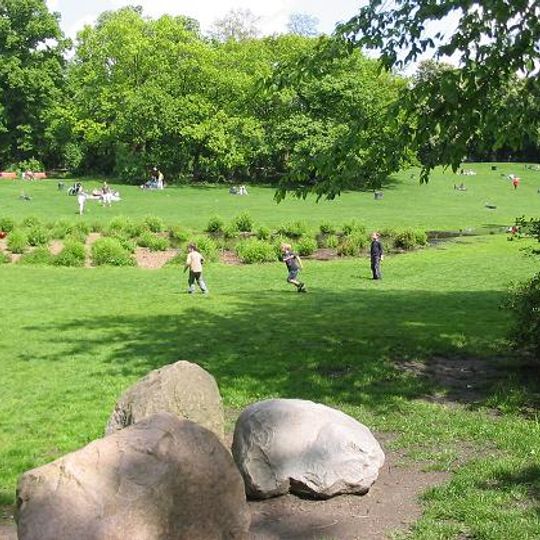
The boulders scattered across the lawns are glacial erratics, placed to show how young Berlin's surface geology is. The park lies in an ice-age side channel of the Grunewald lake chain, a former fen running from Schöneberg town hall past the Fennsee to the Herthasee.
The community of curious travelers
AroundUs brings together thousands of curated places, local tips, and hidden gems, enriched daily by 94,383 contributors worldwide.