Stadtbefestigung, Castle ruin in Forchheim, Germany
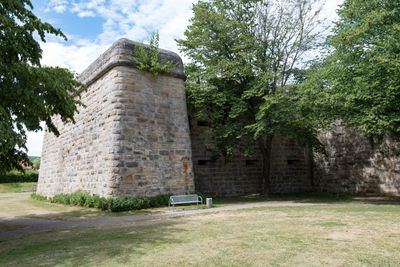
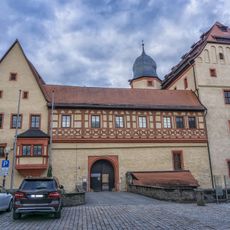
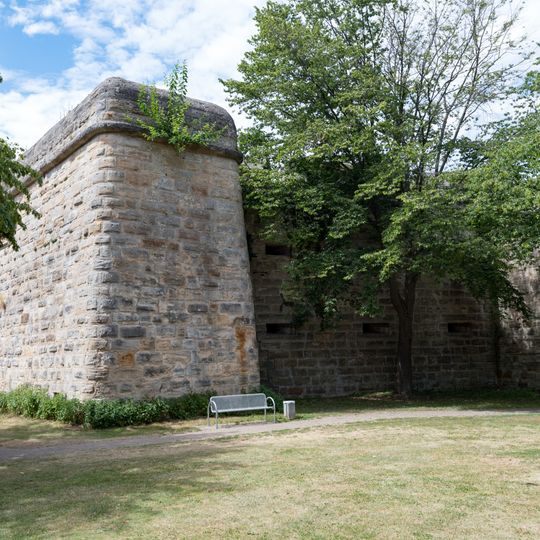
The Forchheim fortification is a medieval defensive structure with stone walls and bastions that encircle the old town in several sections. The system of walls and defenses follows the terrain's contours and still shapes the city's character today.
The fortification was built in the mid-16th century under the Prince-Bishop of Bamberg to protect the city from attack. Over subsequent centuries, it was strengthened several times and adapted to new military technologies.
The bastions and gates carry the coats of arms of the prince-bishops who funded them: Weigand von Redwitz on St. Veit's Bastion, marked 1562, and Veit II von Würtzburg by the Saltor Tower, marked 1561. On St. Valentine's Work, three heraldic stones dated 1657 sit beneath small watchtowers on the corners.
The best-preserved stretches are the north and north-west sides, where the ramparts run through municipal parkland; road cuts interrupt the walls in places. The earthen ramparts stand lower than their original 10 to 14 metres because their bases are buried. The Sattler Gate's pointed archway is now walled up.
The north and north-west sides are the best preserved; only modern road cuts interrupt them. In this state the bastioned town wall is an architectural rarity in Central Europe, and within Bavaria only Würzburg keeps more extensive remains of such an enceinte.
The community of curious travelers
AroundUs brings together thousands of curated places, local tips, and hidden gems, enriched daily by 94,098 contributors worldwide.