Wetterau-Limes, Roman fortification system in Hesse, Germany
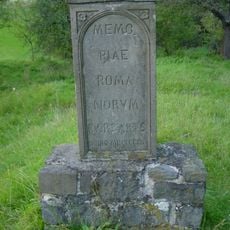
The Wetterau-Limes is the section of the Upper Germanic-Rhaetian Limes that enclosed the Wetterau region in Hesse. It ran from the Taunus ridge, where a cleared supply route was guarded by wooden watchtowers, through fertile farmland to the Main near Großkrotzenburg. Heavy farming has left only a few stretches visible above ground, at the Taunus foothills, near Echzell, Limeshain and east of Hanau.
The Romans cut swathes through the forests of what is now Hesse during Domitian's campaigns against the Chatti in 83 and 85 AD, then secured the Taunus ridge and the Wetterau with a line of wooden watchtowers. The frontier was reinforced over time, with forts at Marköbel, Rückingen and Großkrotzenburg probably built under Trajan. Rome abandoned all territory east of the Rhine in 259/260 AD, after which pottery production in the Wetterau largely ceased.
The fortifications show how Rome marked and controlled its borders in this region. Visitors can see remains of wooden palisades and earth ramparts that reflect the daily life of soldiers stationed at this remote frontier line.
The remains are accessible via marked hiking trails connecting various archaeological points that can be explored on foot. The Saalburg Museum offers detailed information and context about the significance of this Roman frontier system.
For a long time researchers assumed the eastern Wetterau stretch ran through the Vogelsberg; excavations by the Hanauer Geschichtsverein under Albert Duncker and Georg Wolff in the 1880s disproved this. The Ober-Florstadt coin hoard, probably buried during the Germanic incursions of 233 AD, also comes from the border zone.
The community of curious travelers
AroundUs brings together thousands of curated places, local tips, and hidden gems, enriched daily by 93,896 contributors worldwide.