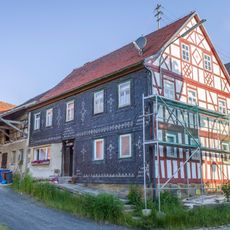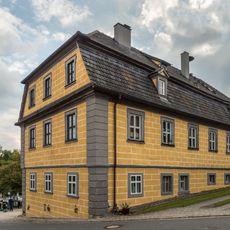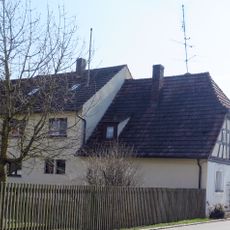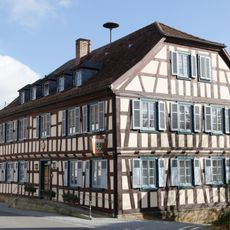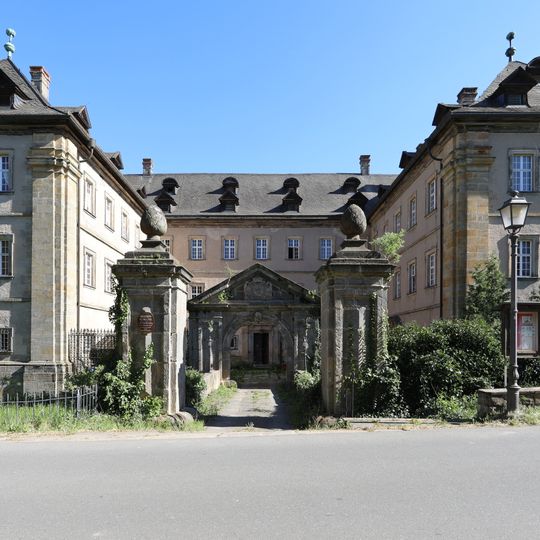
Schloss, Château in Untermerzbach, Germany.
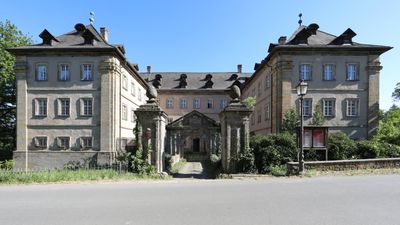
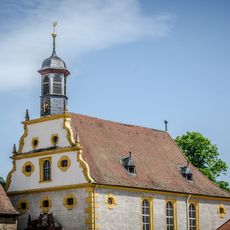
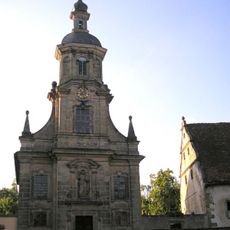
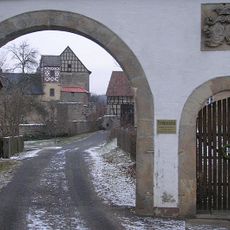
Schloss Gereuth is a Baroque three-winged château built around a courtyard that opens north toward the Schlossplatz and the elevated parish church. A stone portal with a triangular pediment and the Greiffenclau-Vollrath coat of arms, flanked by pillars topped with stone spheres, closes the cour d'honneur. The three-storey wings have Tuscan pilasters, high rectangular windows and light beige plaster; four octagonal, dome-crowned pavilions stand at the corners of the 86 × 75 m grounds.
Gereuth village was founded around 1300; from 1317 the lords of Stein zu Lichtenstein held it as a fief of the Prince-Bishopric of Würzburg, followed from 1566 by the lords of Schaumberg. Prince-Bishop Johann Philipp von Greiffenclau-Vollrath began the present baroque residence in 1705, adding the church, terrace and rectory in 1713/14. Debts forced a sale in 1815 to the banker Jakob von Hirsch; the Prieger family bought it in 1859, and from 1936 it served as a farm and, in 1948-1950, a refugee camp.
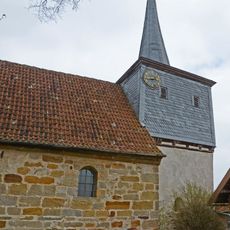
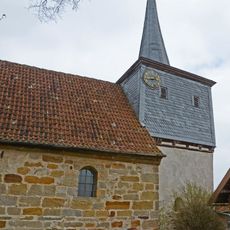
The village was long called "Schaumbergsgereuth" after the lords of Schaumberg, who held it as a fief from 1566. The parish church added in 1713/14 stands on a raised terrace facing the courtyard, and the four octagonal, dome-topped pavilions at the corners of the 86 × 75 m grounds survive from the baroque layout.
The location is in Untermerzbach, a small Bavarian village easily accessed via Dorfstraße 2 where the estate is situated. Visitors should check access beforehand since private properties typically have limited viewing opportunities and may only be seen from outside.
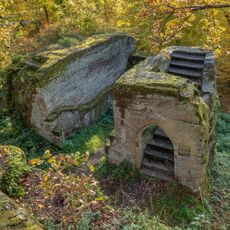
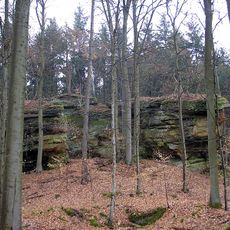
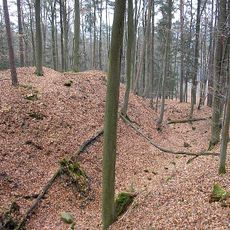
The English landscape garden laid out in the woods between Gereuth and Buch at the end of the 18th century by the Greiffenclau family became known as the "Gereuther Tannen". In the early 19th century it was a popular excursion spot visited by the poets Friedrich Rückert and Jean Paul.
The community of curious travelers
AroundUs brings together thousands of curated places, local tips, and hidden gems, enriched daily by 94,637 contributors worldwide.