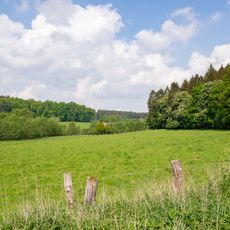
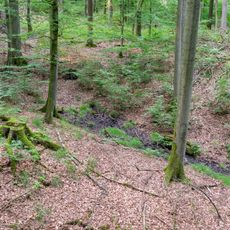
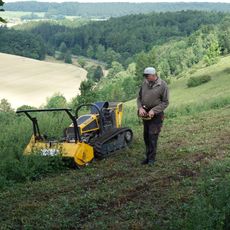
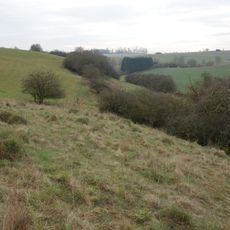
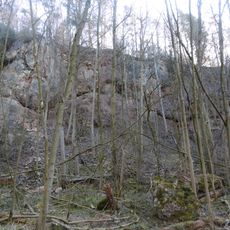
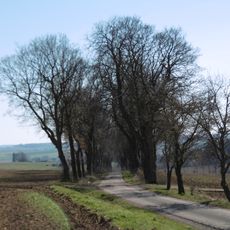
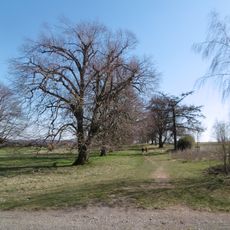
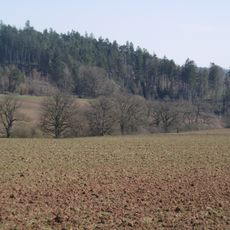
Stadtwüstung Blankenrode, Medieval castle ruins in Lichtenau, Germany.
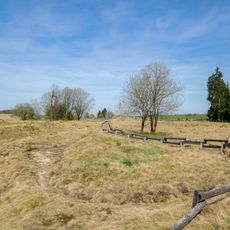
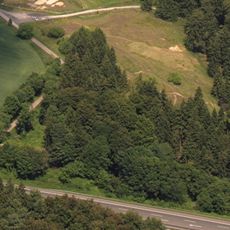
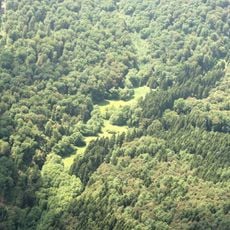
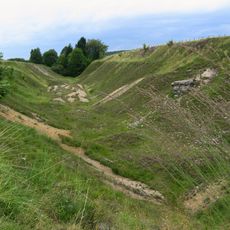
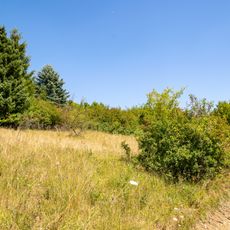
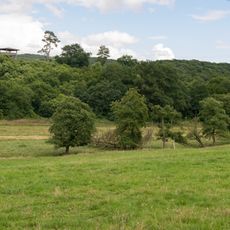
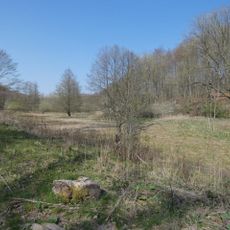
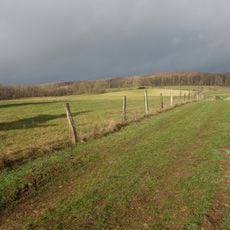
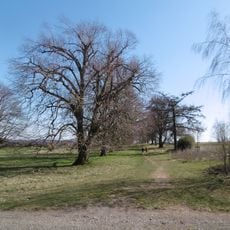
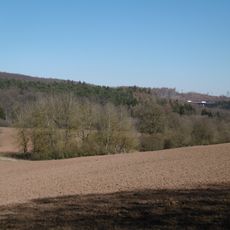
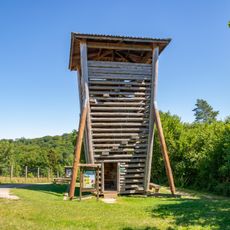
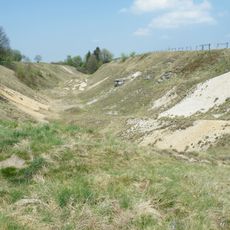
Stadtwüstung Blankenrode is a medieval castle ruin with remains of fortified walls, a central settlement area, and defensive structures perched on a mountain spur in the Egge Mountains. The site displays the archaeological remains of a complete medieval town layout with visible traces of streets, buildings, and the former marketplace.
Around the mid-13th century, Prince-Bishop Simon I of Paderborn (bishop 1247–1277) and the abbot of Corvey built a border fortress on a spur of the southern Egge against the expanding Counts of Waldeck. The town was first destroyed in 1267 during a feud between Paderborn/Corvey and Waldeck/Osnabrück, then rebuilt; a 1298 charter attests castle and town, and a church is documented for 1302. In 1390 Count Henry VI of Waldeck broke in while the garrison was away and destroyed the town, which was never rebuilt.
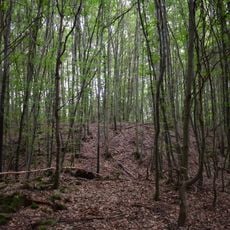
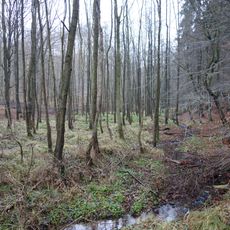
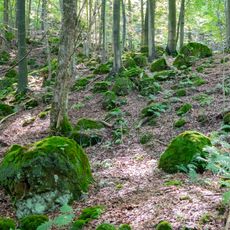
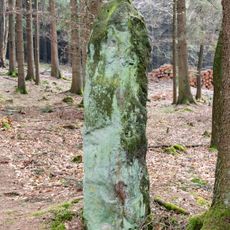
The name Blankenrode refers to the cleared woodland that once surrounded the settlement. Walking through the site, you can make out the outlines of buildings and streets that reveal how the community was organized.
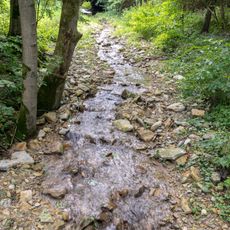
The site is reachable through marked hiking trails that follow the ancient Hersweg trade route, which crosses the watershed between the Rhine and Weser rivers. Visitors should wear sturdy footwear, as the path winds through uneven ground and parts of the archaeological area are rough underfoot.
The double central rampart split the town in two: knights and castle garrison lived in the eastern part, farmers and craftsmen in the western part, probably added after 1267. In the castle district stood a circular fort 25 metres across, held by a bailiff; the offices are recorded for the families von Brobeke, Rabe von Pappenheim and von Spiegel.
The community of curious travelers
AroundUs brings together thousands of curated places, local tips, and hidden gems, enriched daily by 93,030 contributors worldwide.