Hohes Schloss, Medieval castle in Bad Grönenbach, Germany.
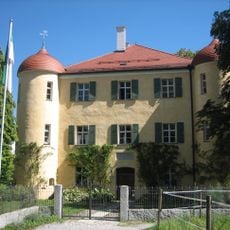
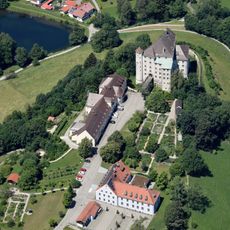
Hohes Schloss is a castle built on elevated ground near Bad Grönenbach with fortified walls, crenellations, and multiple stories showcasing medieval defensive design. The structure features thick stone construction typical of the era, with defensive features integrated throughout its layout.
The oldest part was probably built around 1280 by Heinrich Ludwig von Rothenstein on the site of an earlier refuge castle used by the Lords of Grönenbach until 1260. After his death the castle passed to the Pappenheim family in 1482, was besieged and damaged in the Peasants' War of 1525, and came by inheritance to the Fugger family of Kirchberg-Weißenhorn in 1612/1613. In 1695 it returned to the Prince-Abbey of Kempten, and in 1703 Bavarian and French troops stormed it during the War of the Spanish Succession.
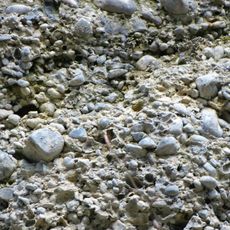
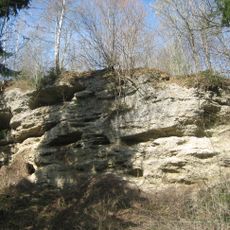
The castle's name, Hohes Schloss, refers to its position on a steep Nagelfluh rock spur at the western edge of Bad Grönenbach. Since 1996 the market town has owned the building and uses it for exhibitions, guided tours, concerts, lectures, festivals and civil weddings; a Kreislehrgarten was laid out around it in 1998.
The castle stands on a steep conglomerate rock spur at the western edge of Bad Grönenbach. The entrance gate lies on the south side and is reached over a modern bridge; from the bridge to the roof the height is 21 metres. A ditch 9 to 10 metres deep runs around the building. Since 1998 a district teaching garden (Kreislehrgarten) surrounds the castle.
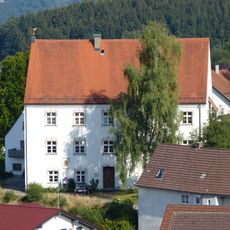
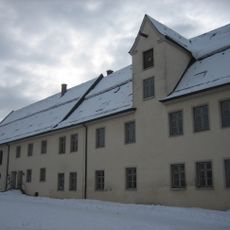
The west facade shows three building phases side by side: a 12th-century Nagelfluh stone section with three rows of windows, a 14th-century brick section with three more rows, and a princely extension of about 1700 with one row. The rock itself reaches into the first upper floor.
The community of curious travelers
AroundUs brings together thousands of curated places, local tips, and hidden gems, enriched daily by 94,391 contributors worldwide.