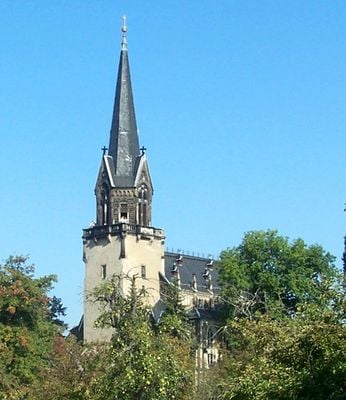
Church of peace, Radebeul, Germany, Gothic Revival church in Radebeul, Germany
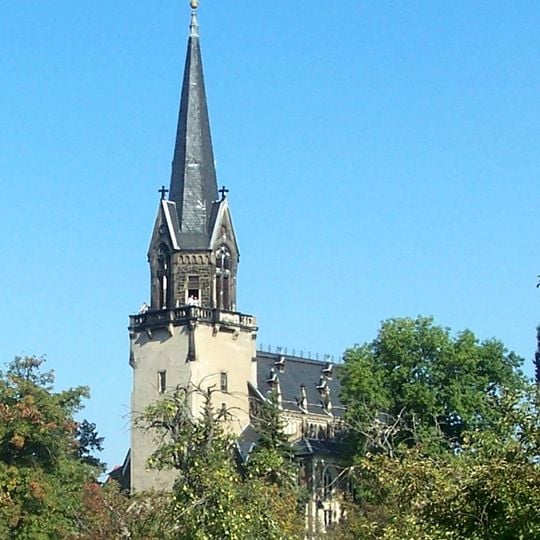
Friedenskirche zu Radebeul is a church building designed in the Gothic Revival style with pointed arches and vaulted ceilings. Its interior features stained glass windows created by Christian Rietschel in the altar area during extensive renovations completed in 1961.
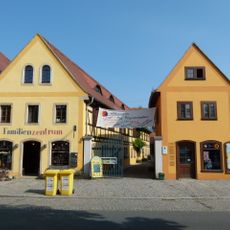
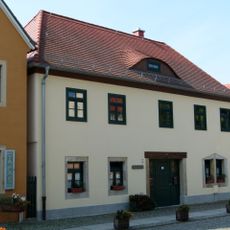
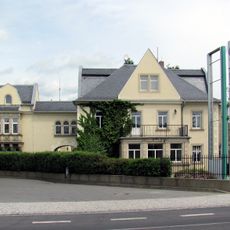
The church's rectory was the site where the Armistice of Kötzschenbroda was signed on August 27, 1645, bringing an end to the Thirty Years' War in Saxony. This agreement between Saxony and Sweden marked a turning point for the region after decades of conflict.
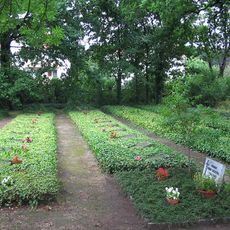
The name Friedenskirche has been used since 1935, referring to the 1645 Armistice of Kötzschenbroda signed in the parish house. In 2012 the Saxon State Agency for Civic Education designated the church, together with the Karl-Preusker Library in Großenhain, a Political Site in Saxony. On the churchyard stands the sandstone sculpture Chronos and the Mourning Woman, restored in 2005 and probably from the 18th century.
The church is easily reached by Bus 400 and Tram 4 at Moritzburger Straße or by S-Bahn S1 at Radebeul West Station. Its location in central Radebeul also makes it convenient to visit on foot.
The 2004 bells from the Karlsruhe foundry Bachert replaced earlier cast-iron bells consecrated in 1949 from Morgenröthe-Rautenkranz. The new bells keep the same pitches and inscriptions as the ones they replaced, so the wording on them is older than the bells themselves.
The community of curious travelers
AroundUs brings together thousands of curated places, local tips, and hidden gems, enriched daily by 94,637 contributors worldwide.