Gallusquelle, Karst spring in Veringenstadt, Germany
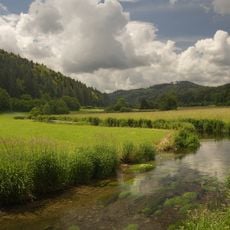
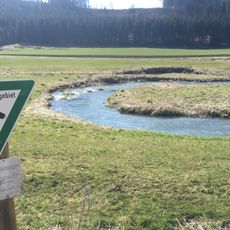
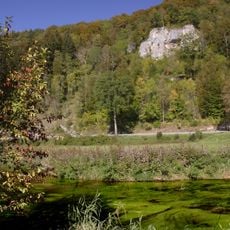
Gallusquelle is a karst spring at the western edge of Hermentingen's built-up centre, squeezed between two village streets below the steep slope above the Lauchert valley. Its small spring pool discharges an average of about 470 litres per second, with lows near 300 and highs up to 2000 l/s, flowing into the Lauchert a few metres away. Part of the discharge is captured for drinking water; a statue of Saint Gallus stands at the basin's rim.
A settlement grew around this spring around 500 AD because the water was essential for life and work. Several centuries later, in 1847, a mill was built that used the spring's power to grind grain.
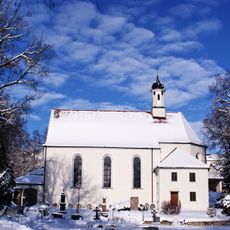
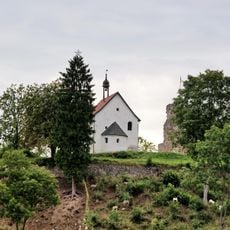
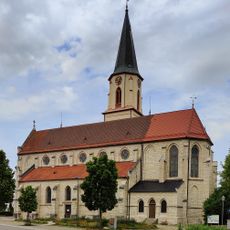
The spring is named after Saint Gallus, who according to legend settled with his pupil Turibius in a cave near the water and built a small chapel here; this chapel, later dedicated to him, is today the second-oldest chapel in Hohenzollern. A statue of the saint stands at the edge of the spring basin. The village name Hermentingen, used until the 14th century as Heremitingen, means the dwelling place of a hermit.
Water from the spring is transported through modern pipe networks to communities in the region, so access is relatively straightforward. You should wear good shoes since the surroundings are natural and can be uneven.
Hydrogeologists conduct research through the AGRO project to study trace substances and pathogens in the karst groundwater system. This work helps understand water quality in underground systems.
The community of curious travelers
AroundUs brings together thousands of curated places, local tips, and hidden gems, enriched daily by 95,038 contributors worldwide.