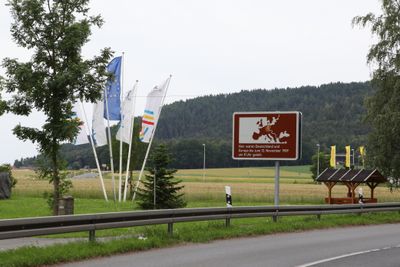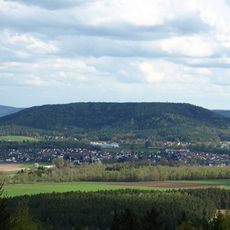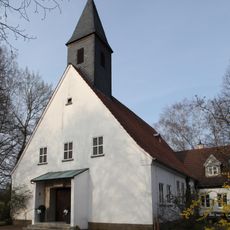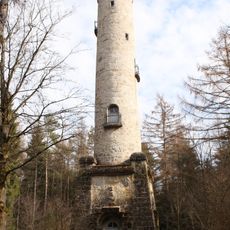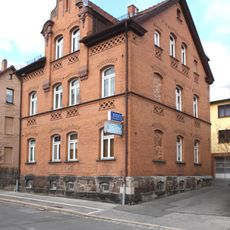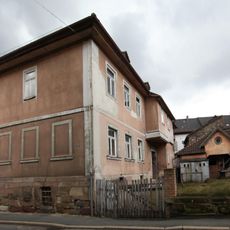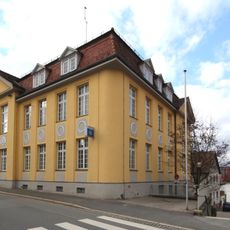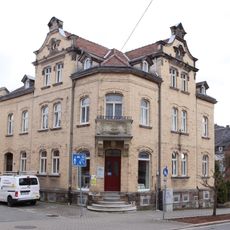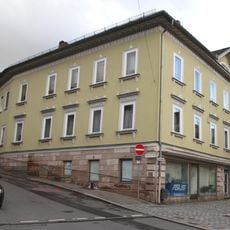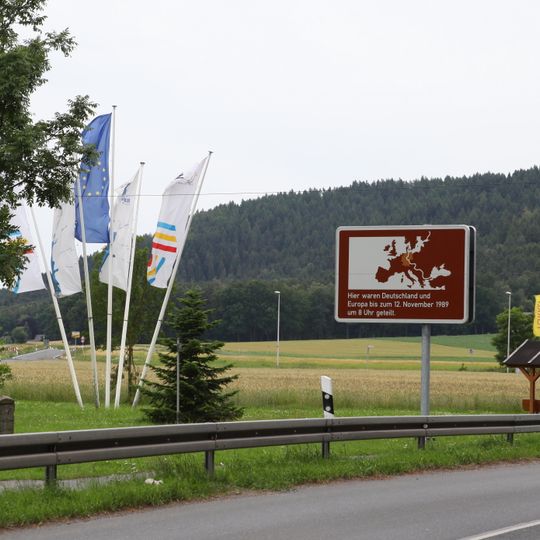
Gebrannte Brücke, Border crossing point between Bavaria and Thuringia, Germany.
The Gebrannte Brücke is a road link crossing the state border between Thuringia and Bavaria, at the boundary between the Sonneberg district of Hönbach and the Neustadt district of Ebersdorf. It spans marshy ground where a timber causeway or small bridge is recorded as early as 1162.
A wooden causeway or small bridge existed here by 1162, its timber charred to make it last longer. Until the 14th century the bridge was the seat of a bridge court, which was then replaced by the district court (Zentgericht) in Neustadt. From 1945 to 1949 the crossing linked the American zone in Bavaria with the Soviet zone in Thuringia.
The name refers to the charring of the timber: according to records from 1162, a log causeway or small bridge crossed the marshy ground here, and the wood was scorched to make it last longer. Until the 14th century the crossing is said to have hosted a bridge court, later replaced by the district court in Neustadt.
The crossing lies on the road between Hönbach and Ebersdorf, where the state border runs along the old bridge line. Since the 1990s the surrounding area has been developed as the Gebrannte Brücke industrial estate on both sides of the boundary, so expect commercial traffic rather than a rural footpath.
On 1 July 1990, Peter-Michael Diestel and Wolfgang Schäuble signed the treaty abolishing border controls on the inner-German border at this spot. The crossing had already reopened on 12 November 1989, three days after the Wall fell.
The community of curious travelers
AroundUs brings together thousands of curated places, local tips, and hidden gems, enriched daily by 94,586 contributors worldwide.