Schlossberg, Archaeological monument in Usedom, Germany
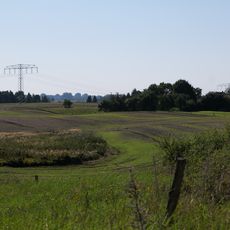
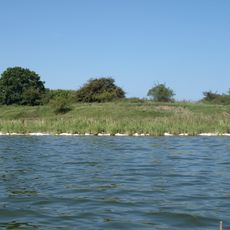
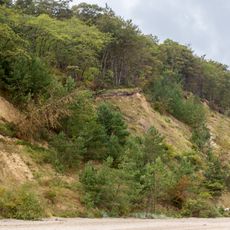
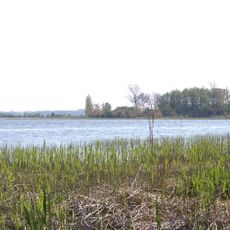
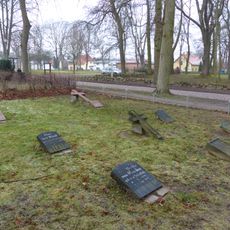
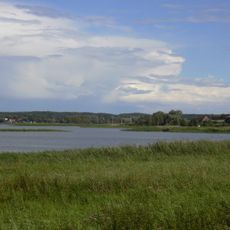
Schlossberg is a hill just under ten metres high at the eastern edge of Usedom town, about 300 metres east of the centre. On it stood a Slavic rampart and later a medieval castle; today the slope bears no buildings, only a stone Latin cross set up in 1928.
A Slavic hillfort stood here, and on 10 June 1128 Pomeranian nobles are said to have accepted Christianity in the presence of Bishop Otto of Bamberg. The castle, called castrum uznam, was first documented in 1140 as castrum huznoim in a bull of Pope Innocent II confirming the Diocese of Wollin. Castellans witnessed ducal charters between 1159 and 1233, and around 1425 the castle served as widow's seat for Duchess Agnes.
The hill's name and function recall the Slavic gord that preceded the medieval castle: the castrum uznam was the seat of a castellany, and castellans appear as witnesses in Pomeranian ducal charters between 1159 and 1233. In 1928 a stone Latin cross with an inscription tablet was placed here for the 800th anniversary of Pomerania's Christianization.
The hill lies about 300 metres east of Usedom's town centre, at the eastern edge of the town. The site is an open archaeological monument with no buildings; the 1928 stone cross stands on the summit. The ground is uneven, so sturdy shoes help after rain.
A stone Latin cross with an inscription plaque was placed on the hill in 1928 for the 800th anniversary of the Christianization of Pomerania. It marks the spot where, on 10 June 1128, Pomeranian nobles are said to have accepted Christianity in the presence of Bishop Otto of Bamberg.
The community of curious travelers
AroundUs brings together thousands of curated places, local tips, and hidden gems, enriched daily by 94,159 contributors worldwide.