Seitzenbuche Roman fortlet, Roman fortlet in Schloßau, Germany
The Seitzenbuche fortlet is a small square stone fort measuring roughly 20 meters on each side. It features a single gate about 2.3 meters wide with rectangular door posts inside and a threshold at its entrance.
This fort was built in the second century to monitor a passage between the Main and Neckar rivers. It served as part of the border defense system in the Roman province of Germania Superior during the later imperial period.
The fortlet's name comes from a beech tree (Buche) at the Seitzenbuche pass, a landmark on the old road between the Main and Neckar. Early investigations were led by Johann Friedrich Knapp in the 19th century, before the Reich-Limeskommission excavated the 20 by 20 metre square. Nothing is known about the unit stationed here, and no votive sculptures are recorded from the site.
The site is located on hilly terrain at District Road 3919 between Hesselbach and Schloßau at about 461 meters elevation. Visitors can view the remains from outside while following the historic route known as Siegfriedstrasse that passes through the area.
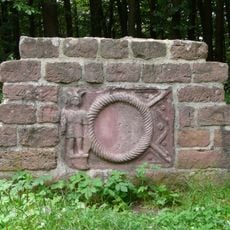
The fortlet was already badly damaged in antiquity, so today only shallow hollows in the forest floor and cornice stones from the fort wall remain visible. An information panel stands at the car park opposite the site.
The community of curious travelers
AroundUs brings together thousands of curated places, local tips, and hidden gems, enriched daily by 94,057 contributors worldwide.