Acher-Rench-Korrektion, River engineering scheme in Baden-Württemberg, Germany
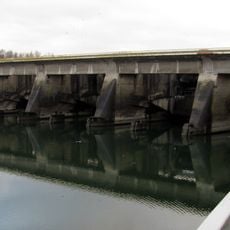
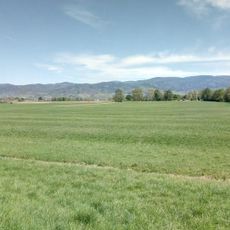
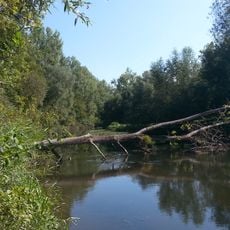
The Acher-Rench-Korrektion (Areko) is a river engineering scheme carried out between 1936 and 1967 in the Upper Rhine plain between Offenburg and Baden-Baden. It straightened and re-routed the Acher and Rench, which descend steeply from the northern Black Forest, and added a flood canal and drainage ditches. The works covered 120 square kilometres, three quarters of it farmland. The first spade was turned on 2 July 1936 at Memprechtshofen by Gauleiter Robert Wagner.
The project started in the 1930s as a response to frequent flooding and the need to drain swampy lands. Work continued for about three decades, fundamentally altering how the rivers flowed and how the land could be used.
The name Areko, short for Acher-Rench-Korrektion, is still used locally for the scheme. The 1936 law named 66 municipalities that had to cover a third of the costs, while Baden paid two thirds. The first spade was turned by NSDAP Gauleiter Robert Wagner on 2 July 1936 at Memprechtshofen, and thousands of Reich Labour Service conscripts worked on the channels.
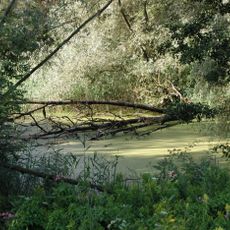
Much of the system is visible from public paths, with many dikes and channels running alongside cycling and walking routes. Water levels and flow speeds change with seasons and weather, so conditions vary depending on when you visit.
What often surprises visitors is the enormous amount of earth that had to be moved to build the system - millions of tons were shifted to create the channels and dikes. Some canals were deliberately designed with gentle slopes to allow natural water flow without needing mechanical pumps.
The community of curious travelers
AroundUs brings together thousands of curated places, local tips, and hidden gems, enriched daily by 94,021 contributors worldwide.