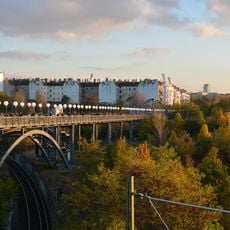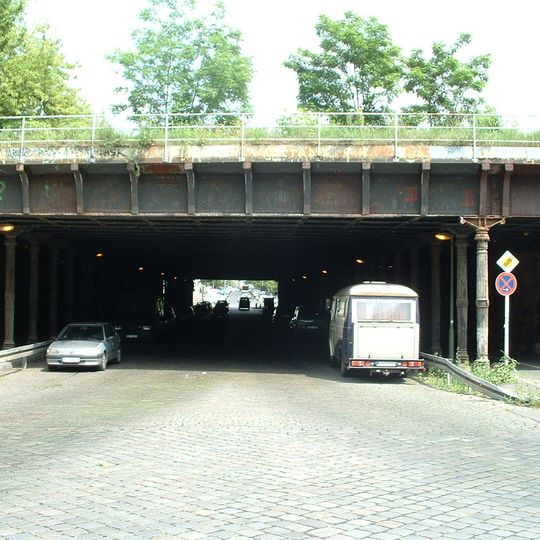
Gleimtunnel, Railway bridge and subway tunnel in Berlin-Mitte, Germany.
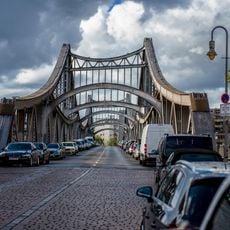
The Gleimtunnel is a railway bridge and subway tunnel in Berlin-Mitte that connects two districts beneath the street level. The passage features separate lanes for vehicles, pedestrians, and cyclists, with the road surface made of traditional cobblestones.
The structure was built around 1900 and displays characteristic features of early industrial transport infrastructure with 78 cast-iron columns. After the Berlin Wall was built in 1961, the tunnel became inaccessible until 1989, when it reopened and reconnected both sides of the city.
The tunnel carries the name of the street it runs under, which connects two neighborhoods with their own distinct characters today. Walking through, you notice how the old cast-iron structure frames your view of the city above and below.
The passage is straightforward to walk or cycle through and provides shade, especially on warm days. Visitors should note that the ground can be uneven and that the structure is actively used by different forms of traffic.
The columns follow a special design known as Hartung columns, which is rarely seen in structures built later in the city. This engineering detail makes it an important example of early twentieth-century techniques that remained hidden during the division of the city.
The community of curious travelers
AroundUs brings together thousands of curated places, local tips, and hidden gems, enriched daily by 90,890 contributors worldwide.