Gemeindepark Lankwitz, Garden monument in Steglitz-Zehlendorf, Germany.
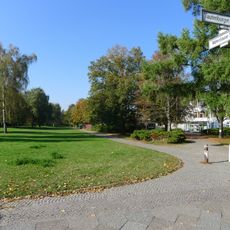
Gemeindepark Lankwitz is a garden monument in the Berlin district of Steglitz-Zehlendorf with broad green areas, established trees, and a large pond. This space includes playgrounds, sports fields, fitness trails, miniature golf, and fenced areas housing deer, goats, and sheep.
In September 1909 the Lankwitz council voted to buy the land for a central public park, opened on 2 September 1911 as Beyendorffpark, named after mayor Rudolf Beyendorff, who pushed the project. Carl Rimann laid it out in 1910–1912. Renamed Gemeindepark in 1919 after Beyendorff was deposed in the November Revolution, it was called Beyendorffpark again from 1933 until the Nazis reverted to Gemeindepark in 1939 when he refused to join the NSDAP. Park and memorial are listed monuments.
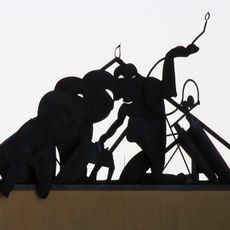
The park's name changed with politics: it opened in 1911 as Beyendorffpark for mayor Rudolf Beyendorff, became Gemeindepark in 1919 after the November Revolution, reverted to Beyendorffpark in 1933, and was renamed Gemeindepark again in 1939 when Beyendorff refused to join the NSDAP. The street Am Gemeindepark followed the same renamings. In the memorial's round wall, an old chestnut stands ringed by a stone bench and three steles: a swearing hand, a Christian cross, and a woman with a ploughshare and a flying eagle, honouring women who did their husbands' work in the First World War.
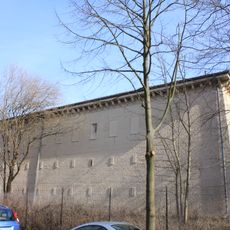
The park lies in the geographic centre of Lankwitz, near the barrier-free Clubhaus Lankwitz senior centre beside the flower beds with benches and chess tables. The 13-metre hill doubles as a sledging slope in winter. The memorial on the hilltop has been closed for years because of vandalism, so it can be viewed only from outside.
The memorial on the hill was designed by Fritz Freymüller and opened on 13 June 1926 for about 400 Lankwitz residents killed in the First World War; the dates of the Second World War were added above the entrance after 1945. Inside a limestone ring wall with arched window openings, an old chestnut stands ringed by a stone bench and three stelae: a swearing hand, a cross, and a woman with a ploughshare. Vandalism has kept it locked for years.
The community of curious travelers
AroundUs brings together thousands of curated places, local tips, and hidden gems, enriched daily by 93,762 contributors worldwide.