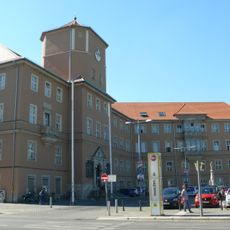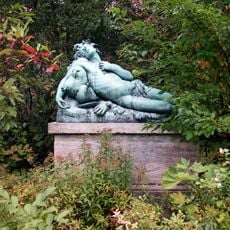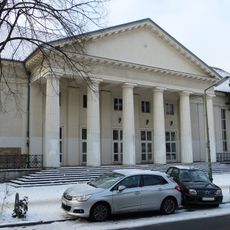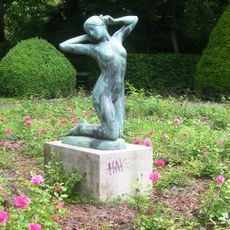
Bernkastler Platz, Heritage park in Lankwitz, Germany.
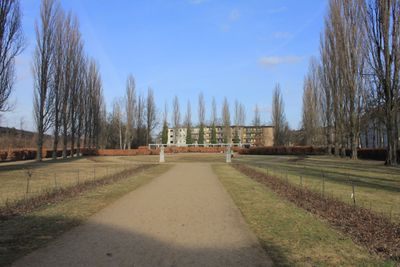
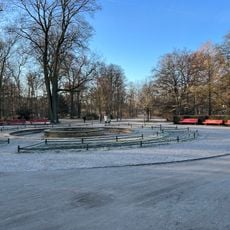
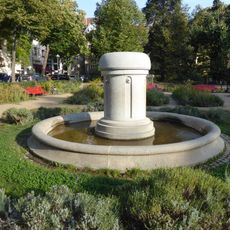
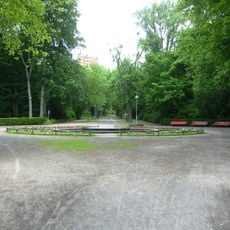
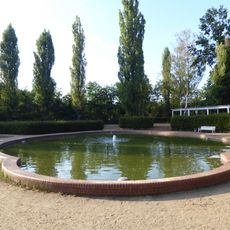
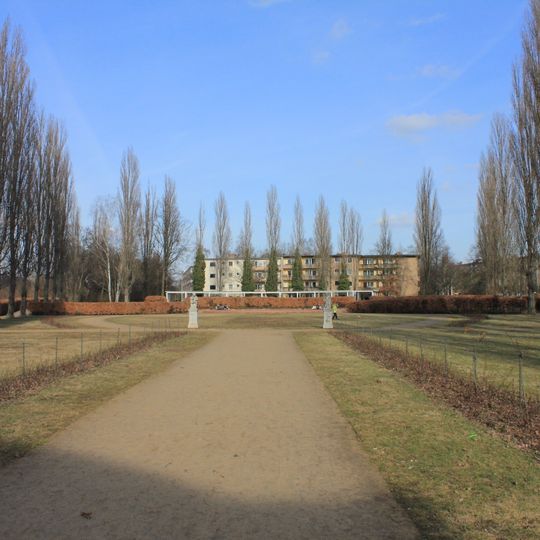
Bernkastler Platz is a garden park in Berlin's Lankwitz neighborhood with geometric paths, a central fountain, and white pergolas framed by poplar trees. The trapezoidal layout preserves this original arrangement, with plenty of seating areas scattered throughout the grounds.
The square was laid out in 1910 as plots A–B of Street 8, built by the municipality of Lankwitz under mayor Rudolf Beyendorff and completed by 1914. On 24 October 1912 it was dedicated to the town of Bernkastel-Kues on the Moselle. In the night of 23–24 August 1943 the Royal Air Force mistakenly bombed Lankwitz; all houses around the square were destroyed and the park's dome was hit. Reconstruction began in 1975 using old postcards and photos, and the restored square was handed over in 1988 for Lankwitz's 750th anniversary.
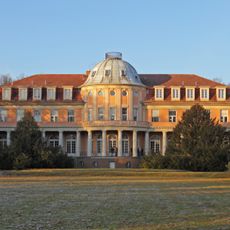
The square is nicknamed Rosengarten (rose garden), and its name, given on 24 October 1912, honours the Moselle town of Bernkastel-Kues. The surrounding streets form Lankwitz's Weinviertel (wine quarter), and the former park dwelling beside the square is popularly called Käseglocke (cheese dome) because of its dome.
The grounds are easily accessible on foot with multiple entry points for convenient access. The main paths are flat and easy to navigate, while a former residential building called Käseglocke now functions as a youth recreation center offering additional facilities.
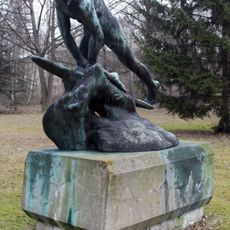
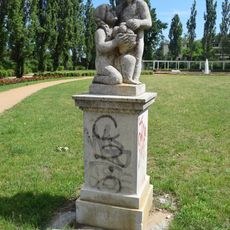
The two putti on pedestals flanking the main path were rebuilt after historic photos during the 1975–1988 reconstruction; the garden architect's name is unknown, and the builder was the municipality of Lankwitz. The originals were lost with the houses around the square in the air raid of 23–24 August 1943.
The community of curious travelers
AroundUs brings together thousands of curated places, local tips, and hidden gems, enriched daily by 92,931 contributors worldwide.