Germanengrab, Archaeological site in Itzehoe, Germany.
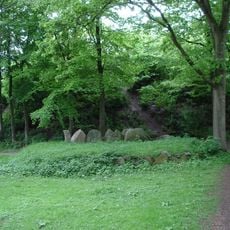
Germanengrab is an archaeological site near Itzehoe containing multiple ancient burial graves from the early historical period. The graves remain visible in the landscape and demonstrate through their arrangement how burial practices were organized during that era.
The burial mound grew from two small mounds into a 5.5-metre-high complex with twelve graves, used from about 1500 to 1200 BC. In 1937 Günther Haseloff excavated it for the Kiel museum. The brick dome over the site was built in 1938 as Nazi propaganda, and since 2020 the place has been called GeSCHICHTENberg Itzehoe.
The burial ground reflects how people in this region lived and what they valued through the objects placed with their dead. The items reveal their daily practices, craftsmanship, and connections with neighboring communities.
The Geschichtenberg lies at the edge of Itzehoe's centre, at the corner of Timm-Kröger-Straße and Langer Peter. The brick dome and barrel-vaulted entrance hall can be viewed from outside; the hilltop also gave a wide view over the marshes before the town was built up. Since 2020 the site has been officially called GeSCHICHTENberg Itzehoe, and a working group of the Heimatverband für den Kreis Steinburg is developing an educational centre there.
The name Germanengrab is misleading: excavations in 1937 by Günther Haseloff uncovered twelve graves of the Nordic Bronze Age, not a Germanic burial. The site was also used as the gallows hill of Itzehoe's Cistercian convent, and since 2020 it has officially been called GeSCHICHTENberg Itzehoe.
The community of curious travelers
AroundUs brings together thousands of curated places, local tips, and hidden gems, enriched daily by 93,942 contributors worldwide.