Goethe-Theater, Theatre in Bad Lauchstädt, Germany
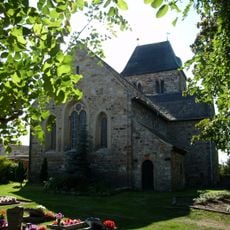
Goethe-Theater is a plain theatre building in Bad Lauchstädt whose function is legible from outside; sandstone buttresses added in the mid-19th century obscure its original character. The auditorium is simple but finely proportioned, with good sightlines and acoustics, a canvas ceiling read as an "ancient sun sail", plain parquet seating, upholstered loggia chairs and Argand lamps, electrified since 1908.
Goethe bought Joseph Bellomo's spa theatre for 1,200 thalers in 1791 and brought the Weimar court theatre to Lauchstädt each summer from 13 June 1791. The new house opened on 26 June 1802 with Goethe present, 672 guests admitted and hundreds turned away; it staged his prelude Was wir bringen and Mozart's Titus. Goethe contributed about a sixth of the building costs of over 9,000 thalers.
The theatre's name recalls Johann Wolfgang von Goethe, who as director of the Weimar court theatre bought Joseph Bellomo's spa theatre for 1,200 thalers in 1791 and oversaw the new building. From 13 June 1791 the Weimar company played regular summer seasons here, and Halle students crossed into neighbouring Kursachsen to attend, since Frederick the Great had banned theatre in Halle in 1771.
The auditorium is reached through the historic spa buildings of 1776–1780, and the 1802 house keeps its original seating layout, so sightlines and acoustics are best judged from the parquet rather than the boxes. Sandstone buttresses added in the mid-19th century now brace the plain exterior. The building is electrified only since 1908; the Argand lamps remain in place.
The theatre's auditorium is still lit by Argand lamps, and it was only electrified in 1908. The flat canvas ceiling was read as an "ancient sun sail". Sandstone buttresses added in the mid-19th century now obscure the plain exterior.
The community of curious travelers
AroundUs brings together thousands of curated places, local tips, and hidden gems, enriched daily by 94,083 contributors worldwide.