Schloss Bündorf, Cultural heritage monument in Schkopau, Germany.
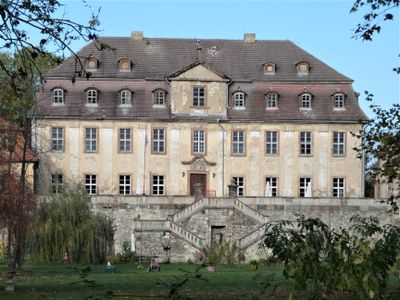
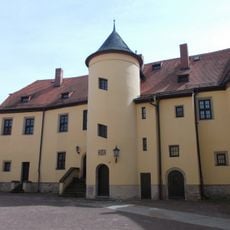
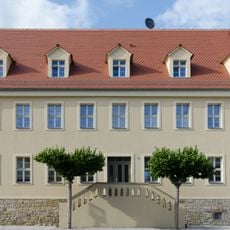
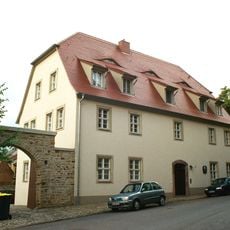
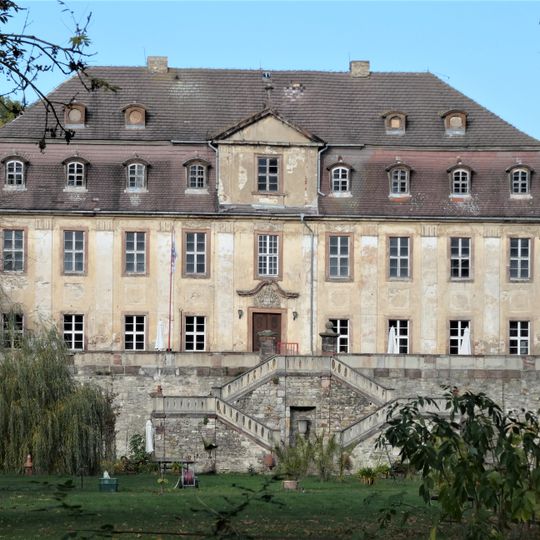
Schloss Bündorf is a two-storey Baroque rectangular building of nine axes with a mansard hipped roof, built in 1764. Flat colossal pilasters divide the southern long front of the corps de logis. The main portal in the wide central bay has a coat-of-arms relief beneath a curved gable, and a two-flight outdoor staircase leads from the terrace to the former castle park.
Ludwig Adolph Freiherr von Zech had the present Schloss Bündorf built in 1764 by Johann Samuel Löhnitz of Merseburg, on the site of an early medieval water castle in the Laucha lowland. The Zech-Burkersroda family held it until the 1945 land reform; from 1950 to 1996 it served as a nursing home and cooperative farm, and descendants of the former owners bought it at auction in 2012.
The main entrance displays a coat of arms carved into stone beneath a curved gable, which recalls the noble family that once owned it. Double staircases lead down to garden spaces that still suggest how the property was used as a seat of power.
The castle has been lived in by its owners since 2018, and restoration of the farm buildings is partly finished. It is a private home, not a museum, so there are no opening times; anyone wishing to see the grounds or the building should contact the owners in advance. The entrance is reached by a bridge over the dry moat.
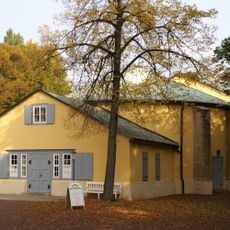
The gate's pilaster portal with a broken triangular pediment carries the initials of Erdmuthe Dorothea, Duchess of Saxony, who died in 1720 and held her widow's seat here. The bridge crosses a water moat that is now dry.
The community of curious travelers
AroundUs brings together thousands of curated places, local tips, and hidden gems, enriched daily by 93,341 contributors worldwide.