Börstel Convent, Gothic monastery in Berge, Germany
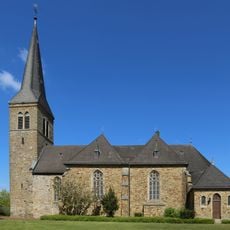
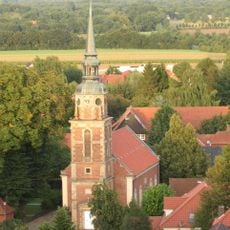
The Börstel convent is a brick structure with Gothic features, located at the northern edge of the Osnabrück district within the Börsteler Forest. The complex centers on a four-nave church dedicated to Saint Mary, surrounded by residential and service buildings for the religious community.
The convent was first documented on 3 June 1246, when Bishop Engelbert I of Osnabrück granted it the Schlingmann estate near Menslage; the foundation itself probably dates a few years earlier. Around 1251 it moved from Menslage into the Börstel forest, after Count Otto I of Tecklenburg sold the community half a piece of land there for 100 marks. In December 1811 the abbey was dissolved under French rule, a step reversed at the end of 1813.
The convent was first called Rosental, then Marienbergen after the Virgin Mary, patron of the Cistercian nuns; that name appears in 13th-century charters. Since the Peace of Westphalia and the 1650 Nuremberg Diet, the Capitulatio perpetua has required eight of the ten resident members, including the abbess, to be Protestant and two Catholic. In 2004 the non-noble geographer Britta Rook succeeded Johanne von Bodelschwingh as abbess.
Visitors can attend religious services or stay overnight at the complex by arranging in advance with the community. The grounds also host concerts and lectures throughout the year that welcome outside guests.
The church was built entirely from local brick in an early Gothic style, which is rare for this construction method in the region. The use of regional materials shows how the community adapted to its forest surroundings.
The community of curious travelers
AroundUs brings together thousands of curated places, local tips, and hidden gems, enriched daily by 93,965 contributors worldwide.