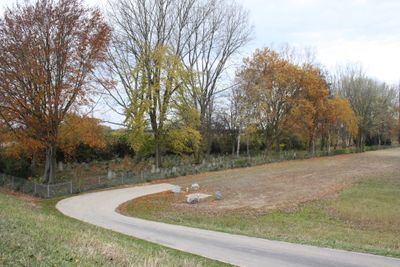
Jewish cemetery Bonn-Schwarzrheindorf, Jewish cemetery in Schwarzrheindorf, Beuel district of Bonn, Germany.
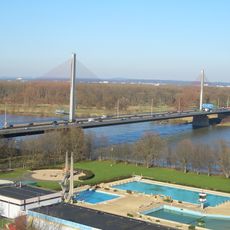
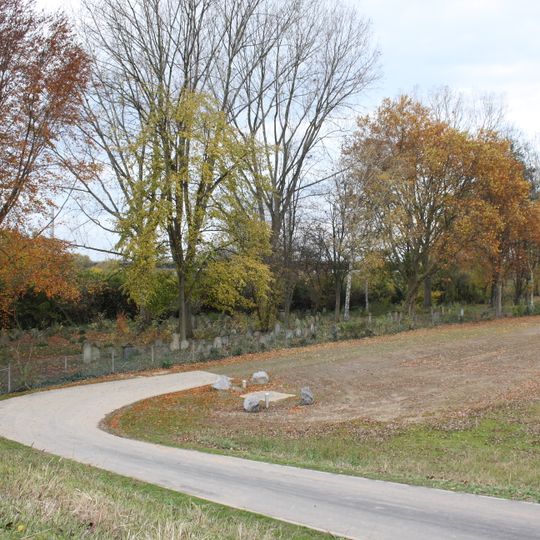
The Jewish cemetery of Bonn-Schwarzrheindorf lies downstream of the Rhine behind the flood embankment, next to the sewage plant and the Friedrich-Ebert-Brücke. The 7,660-square-metre, tree-lined burial ground is enclosed by a fence with two entrance gates and holds 445 surviving gravestones, the oldest dated 1623. It is listed as an architectural heritage monument.
The cemetery was acquired in 1818 by the Jewish community of Bonn and used by both the Bonn and Beuel congregations; the oldest surviving gravestone dates from 1623, so the founding date remains unclear. In 1898 the grounds were divided, with the northern part transferred to the Villich (Beuel) congregation and the southern part kept by Bonn. A 1939 anti-aircraft installation caused considerable damage.
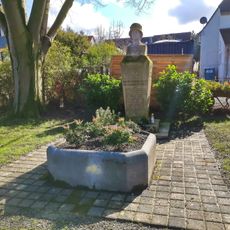
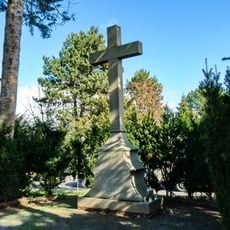
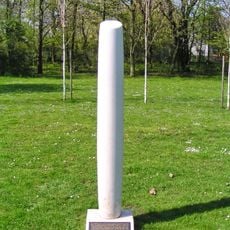
The cemetery holds the graves of several chief rabbis, among them Isaak Kahana Rapaport (died 1788), Simcha Bunim Cohen Rappaport (died 1816) and Abraham Auerbach (died 1846). The merchant Rachel Zuntz (1787–1874) is also buried here. A memorial stone for the Holocaust was erected on the flood dyke in November 1968 by the then town of Beuel.
The cemetery is accessible during daylight hours and located in the Beuel district. Visitors should contact local authorities or tourism organizations before visiting to confirm opening times and ask about possible guided visits.
The oldest surviving gravestone dates from 1623, though when the cemetery was first laid out remains unknown. Among the 445 stones still standing are the graves of several chief rabbis, including Isaak Kahana Rapaport (1730–1788) and Abraham Auerbach (1763–1846).
The community of curious travelers
AroundUs brings together thousands of curated places, local tips, and hidden gems, enriched daily by 92,864 contributors worldwide.