Göhrener Ei, Architectural heritage monument in Prenzlauer Berg, Berlin, Germany
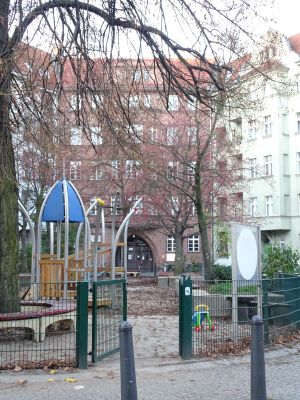
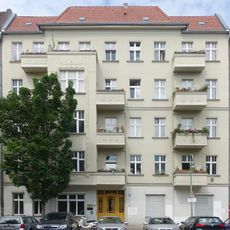
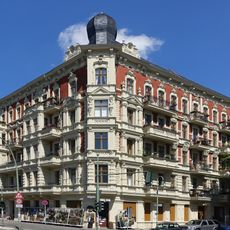
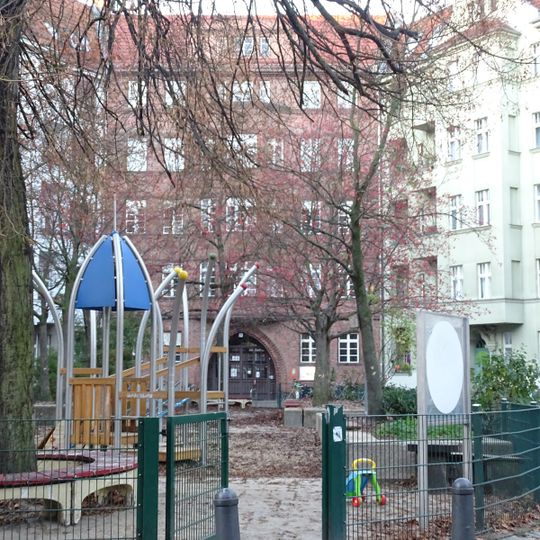
Göhrener Ei is a residential ensemble in Berlin's Prenzlauer Berg district with buildings arranged in a distinctive oval shape along Göhrener Street. The facades display Art Nouveau details, while the ground floors contain shops and upper levels hold apartments.
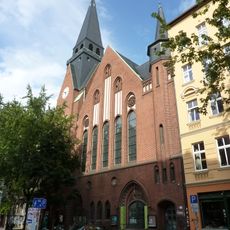
The ensemble was built between 1909 and 1913 as an innovative housing project featuring modern amenities like indoor plumbing in apartments. A parish house with a domed hall was added from 1926 to 1928, transforming the character of the site.
The name 'Ei', meaning egg, refers to the oval shape you see when walking through the curved streets surrounding the complex. Residents and visitors experience this form as a defining feature that makes the place feel enclosed and connected.
You can reach the ensemble easily by public transport as it sits centrally in the neighborhood with several stops nearby. The best way to appreciate the oval layout is to walk around the perimeter and follow the curve of the streets.
A large fountain designed by architect Kurt Stoeving once occupied the center of the street, later converted to serve as a water reservoir for firefighting. This transformation reveals how the space adapted to wartime needs.
The community of curious travelers
AroundUs brings together thousands of curated places, local tips, and hidden gems, enriched daily by 60,000 contributors worldwide.