Güttlerbüschl, Mountain summit in Neusalza-Spremberg, Germany
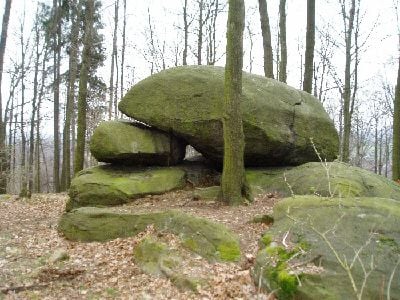
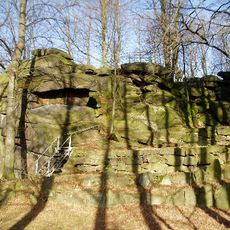
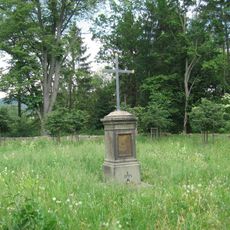
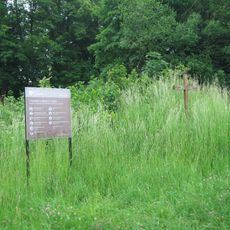
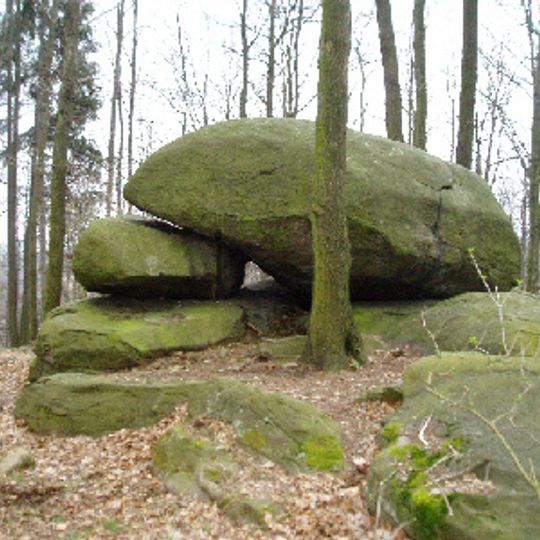
Güttlerbüschl is a 365.2 m high hill in Neusalza-Spremberg, a southeastern spur of the 410 m Hahneberg. Its one-hectare open deciduous wood surrounds a granite summit crag, with fields and meadows around. A group of granite blocks, two side stones supporting a capstone, forms a dolmen-like structure; one block is called Thors Amboss.
The blocks at Güttlerbüschl are read by some researchers as a dolmen: two supporting stones with a capstone, a form of megalithic tomb. If so, it would be the grave of a Neolithic clan elder or shaman of the Funnel Beaker culture, buried roughly 5,000 years ago. That culture used the Upper Lusatian highlands for farming and herding from about 5500 to 2200 BC but did not settle there.
The granite blocks here are part of a mysterious group of sites in Upper Lusatia that have occupied people across generations. Visitors can examine these natural formations and draw their own conclusions about what role they may have played in ancient times.
Access to the summit is on foot across private property, so permission or a guided tour is necessary. Visitors should wear appropriate clothing for outdoor conditions, as weather can change quickly at elevated locations.
Since 2008 the Bruno-H.-Bürgel public observatory in Sohland has studied the rock under the name "Projekt Götterhand"; the block was given the working title "Thors Amboss" and, for its supposed calendar function after the scheme of the Nebra sky disc, the addition "Steinerne Himmelsscheibe von Neusalza-Spremberg". Since 2010 events have been held here at the summer solstice, and since 2013 that date is observed as the International Day of Archaeoastronomy.
The community of curious travelers
AroundUs brings together thousands of curated places, local tips, and hidden gems, enriched daily by 92,780 contributors worldwide.