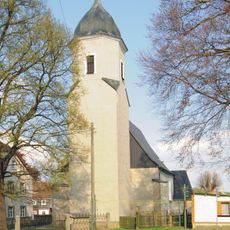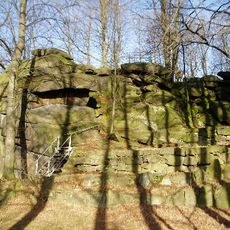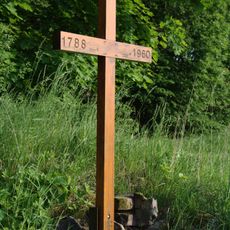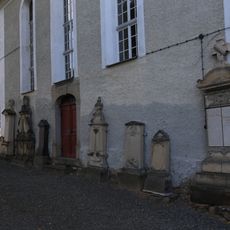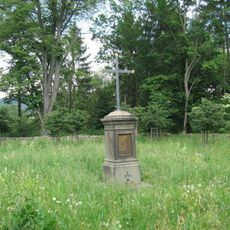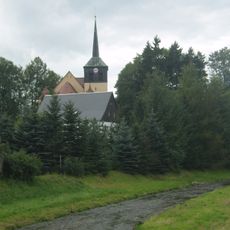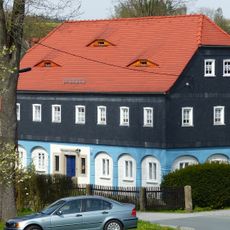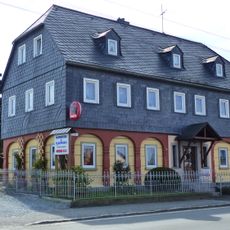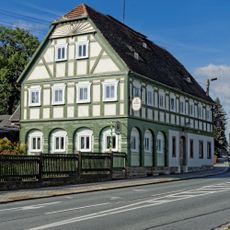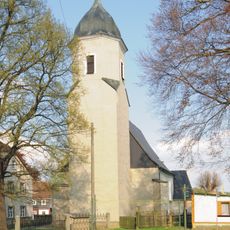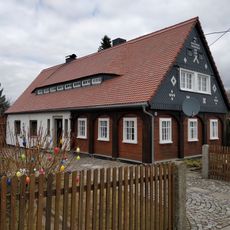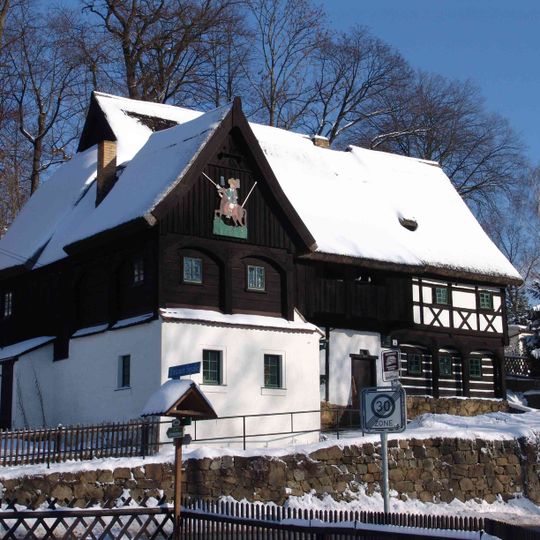
Rider's house, Upper Lusatian house and retaining wall in Neusalza-Spremberg
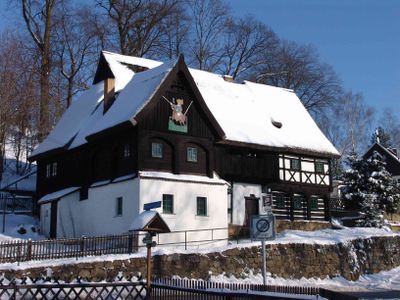
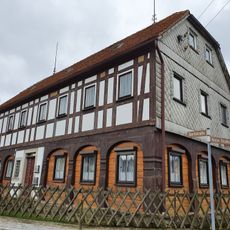
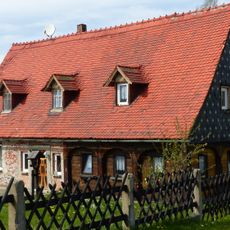
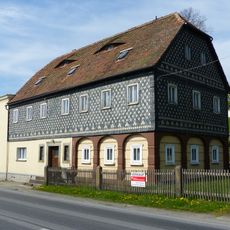
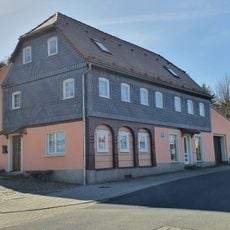
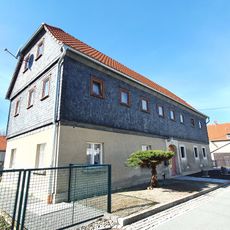
The Rider's house is an old timber structure in Neusalza-Spremberg built before 1660 as a small farmhouse and marked by its characteristic wooden construction. The building contains several authentic rooms with original furnishings, including a weaver's workshop, a shoemaker's room, sleeping areas, and exhibition spaces that document 19th-century craft life.
The building was established before 1660 as a farmhouse and evolved over centuries through several modifications, notably around 1800 when a western addition with brick base and wooden upper structure was added. From 1938 onward it was recognized as a cultural monument and purchased by the town in 1939, ensuring its protection and eventual conversion into a museum.
The house gets its name from a wooden rider figure placed on the gable in 1874, which came from a local festival tradition. This sculpture represents the Ritterstechen, an old game that was popular in the region and whose traces can still be seen on other traditional houses throughout the area.
The house stands on a main road and is easy to find, with exhibits in several rooms and a weaver's workshop showing craft techniques. Visitors can see the building during warm months and by prior arrangement in other seasons, and should allow time to explore the various rooms and their displays at a comfortable pace.
The wooden rider figure was brought home in 1874 by a young woman named Christiane Louise Schniebs after a local festival, a prize from a Ritterstechen competition. This unusual artwork on the gable is now the building's most distinctive feature and sets it apart from other historic structures in the region.
The community of curious travelers
AroundUs brings together thousands of curated places, local tips, and hidden gems, enriched daily by 90,823 contributors worldwide.