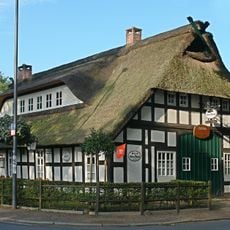
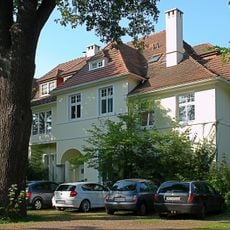
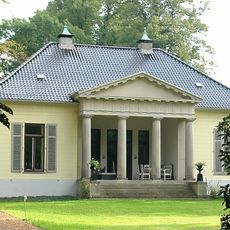
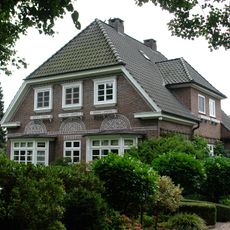
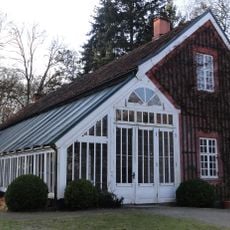
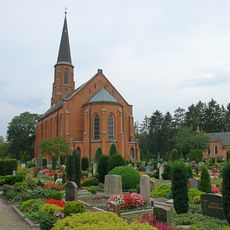
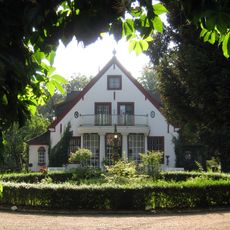
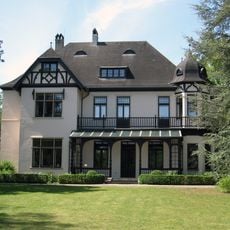
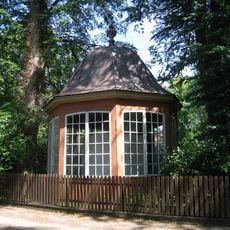
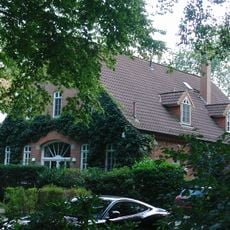
Gut Hodenberg, Cultural heritage ensemble in Oberneuland, Bremen, Germany.
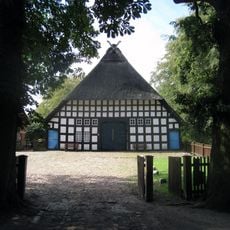
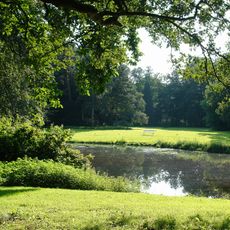
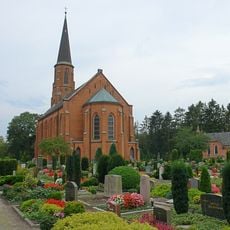
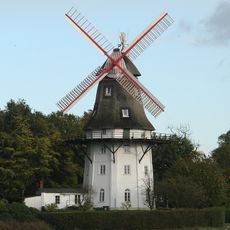
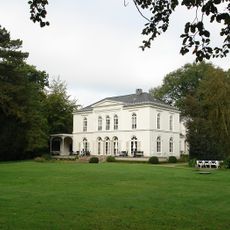
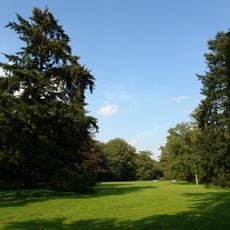
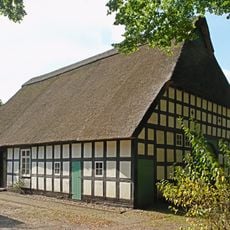
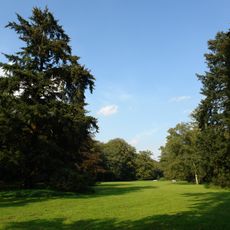
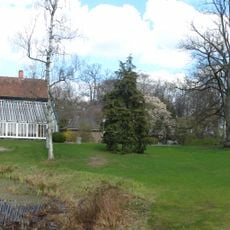
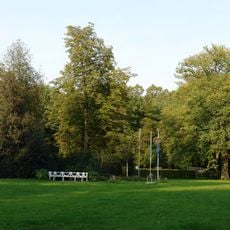
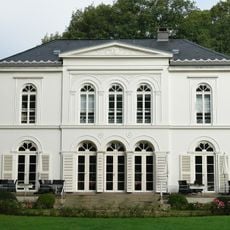
Gut Hodenberg is an estate spanning seven hectares of parkland in Oberneuland near Bremen, Germany. The property features a manor house built in 1767 along with European furniture collections and Asian sculptures displayed throughout the buildings and grounds.
Gut Hodenberg was first documented in 1149, when it was a moated noble seat; the Hodenberg name itself appears only in 1421, when the Edlen von der Hellen held it until 1470. The Clüver family owned it until 1608, and around 20 farmers paid dues to the Hodenberg landlord. In 1609 Bremen's mayor Diedrich Hoyer the Younger bought the estate and built a new manor house.
Robert Rickmers, who grew up with the green-white-red colours of Heligoland, gave the house that colour scheme, and his wife had an open-air stage laid out in the grounds. The estate became a meeting place for artists and merchants who praised Rickmers' wine cellar; Ernst Müller-Scheeßel, Th. Hermann, Albert Ritterhoff and Heinrich Vogeler worked here. In 1936 Rickmers turned the house into the Stiftung Der Hodenberg, which after his death in 1948 became a foundation for the care of Lower Saxon local heritage.
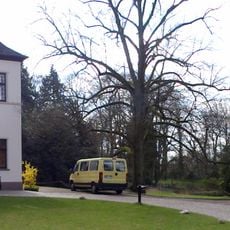
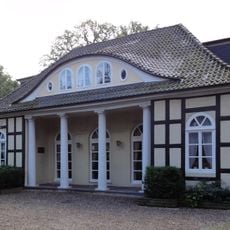
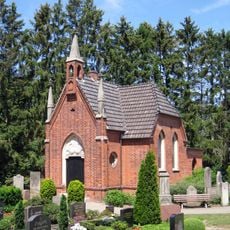
The park lies at the corner of Oberneulander Landstraße and Hodenberger Straße in Oberneuland; the manor house, park and outbuildings are listed monuments. The house itself is not open to the public, so visitors see it from outside. The stables are used by the Hubertus riding club.
Friedrich Engelken bought the estate in 1810 and set up a psychiatric clinic there, called at the time an Irrenanstalt, which ran until 1863. The manor house of 1787, surrounded by a moat, had earlier been rebuilt by consul Hermann Heymann.
The community of curious travelers
AroundUs brings together thousands of curated places, local tips, and hidden gems, enriched daily by 92,648 contributors worldwide.