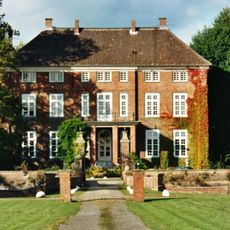
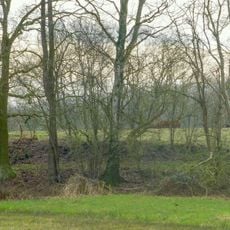
Gut Vehr, Medieval castle in Lower Saxony, Germany.
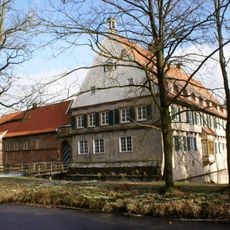
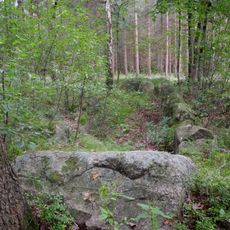
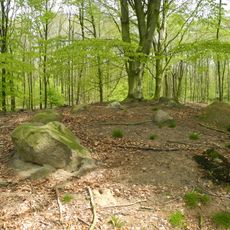
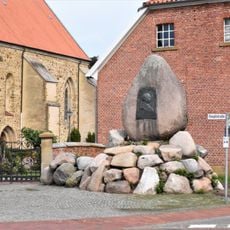
Gut Vehr is a castle in Lower Saxony featuring stone walls that display typical characteristics of northern German defensive architecture. The building complex combines residential spaces with fortified elements arranged across multiple connected structures.
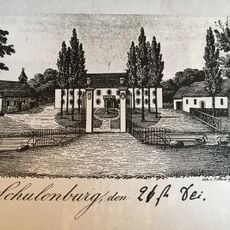
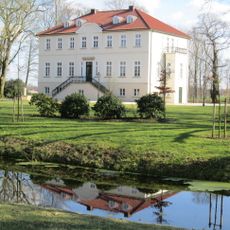
Gut Vehr was first mentioned in the 13th century as a castle and fortification, later a moated farmstead. In 1522 it belonged to the von Schmerten family, passing by marriage to von Grothaus in 1540; around 1650 it reached the von Frydag family via von Kobrinck and von Schade. From 1876 to 1929 it was held by Burghard von Schorlemer-Alst and his son Clemens, who had the new manor house built in 1877.
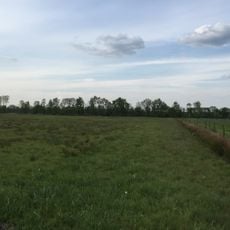
The estate gave its name to the Hengelage district, which was built on Gut Vehr land; the woodland and remaining grounds still belong to the property. The avenue branching off the B68 to the estate is part of the "Kunsttour", a cycling loop through the northern Artland lined with twelve paintings that reproduce the landscape visible beyond each frame.
The castle is easily accessible via regional roads with parking available near the entrance. Visitors should check ahead about access times since the grounds may not always be open to the public.
The estate is known nationwide among swingolf players for its swingolf course, laid out on the grounds of the former fortification. The avenue branching off Bundesstraße 68 is part of the "Kunsttour", a cycling loop through the northern Artland lined with twelve paintings that reproduce the landscape visible beyond each frame.
The community of curious travelers
AroundUs brings together thousands of curated places, local tips, and hidden gems, enriched daily by 92,991 contributors worldwide.