Heilig-Kreuz-Kirche, Gothic Revival church in Kreuzberg, Germany.
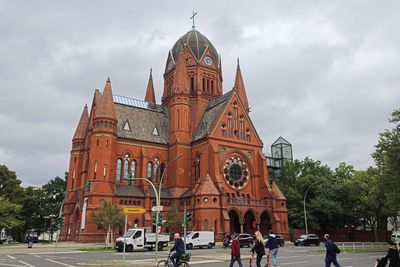
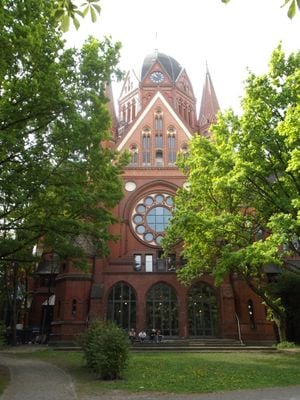
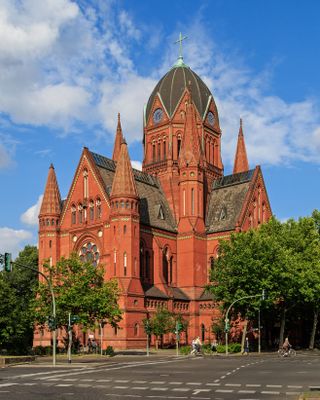
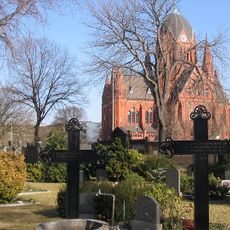
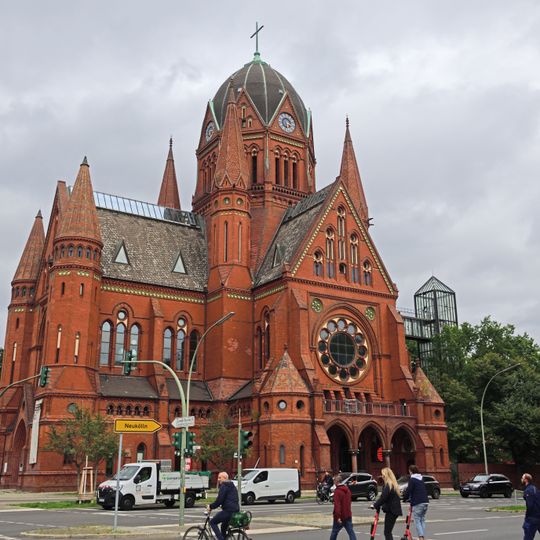
Heilig-Kreuz-Kirche is a red brick Gothic Revival church on Zossener Straße, built 1885–1888 to plans by Johannes Otzen. A central tower with clock faces and a dome rising from 19 m is flanked by pointed roofs and conical turrets; the gabled facade holds a rose window in a pointed arch above three large pointed-arch windows. The nave and transept end in an apse with arched windows, and a dark metal framework is attached on the right side.
The church was completed in 1888 and dedicated in the presence of Emperor Wilhelm II and Empress Auguste Victoria, who donated the altar. It emerged during Berlin's period of industrial growth and has shaped the neighborhood's character since then.
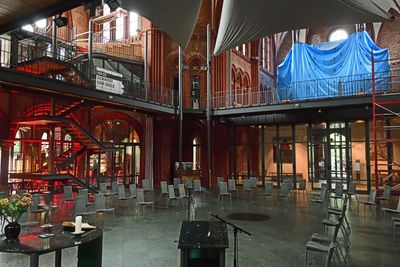
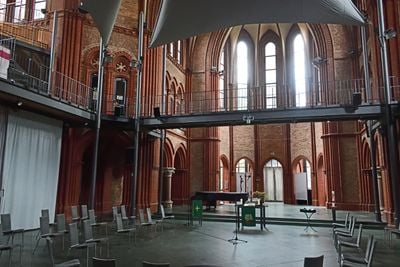
The church displays contemporary art installations, including colored glass windows by Johannes Schreiter and a triptych depicting Christ during the Holocaust. These works shape the interior and invite visitors to engage with profound themes.
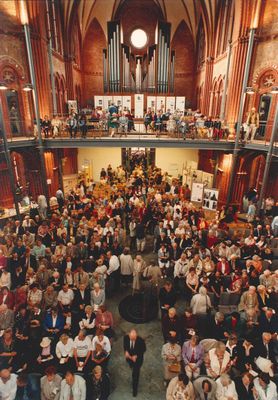
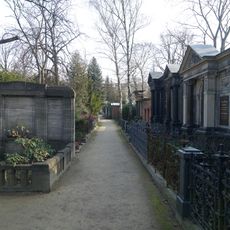
The church stands on Zossener Straße just before the Landwehr Canal, diagonally opposite the cemeteries in front of Hallesches Tor. The building and its extensions host events for up to about 550 people, with smaller rooms and a church café grouped around the open main hall. The garden beside the church contains a small waterfall.
The building houses a restored organ built by Boston organ builders Elias and George G. Hook between 1870 and 1871. This instrument adds a rare transatlantic character to the church's acoustic identity.
The community of curious travelers
AroundUs brings together thousands of curated places, local tips, and hidden gems, enriched daily by 94,634 contributors worldwide.