Herzenbergkapelle, Chapel in Hadamar, Germany.
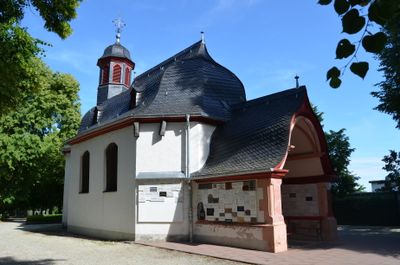
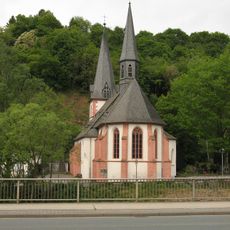
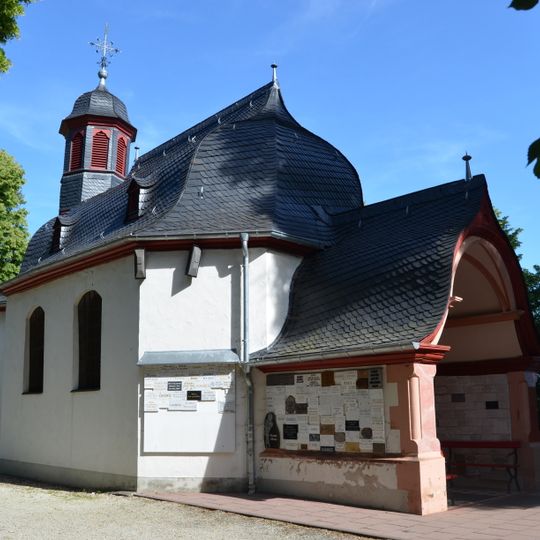
The Herzenbergkapelle is a white-plastered chapel with a dark grey slate roof on the Herzenberg above Hadamar. Its core is the octagonal choir of the 1675 chapel, about 4.5 metres across, extended in 1691 by a rib-vaulted nave; a porch renewed in 1860 with a curved roof completes the present form. The lower wall band is painted pale pink, and two panels of small votive plaques hang below the roof.
The chapel was constructed in 1675 and received a new baroque altar completed in 1693 that became the focal point of the interior. The altar houses a medieval wooden sculpture that predates the chapel itself by several centuries.
The chapel serves as a place where visitors and locals leave personal votive tablets and messages on the walls, reflecting how people have used this site to mark important moments. These handwritten dedications create a living record of individual hopes and memories.
A steep Stations of the Cross leads from the town up to the Herzenberg; it was first laid out in 1697 and redesigned in 1908 with seven neo-baroque sandstone stations on the left. A second, "new" Stations of the Cross from the 1950s follows a different route. The chapel is busiest from May to September, when pilgrims still visit.
The name Herzenberg comes from the four princely hearts buried in the chapel, which the Jesuits built; before that the hill was called Hirtzberg or Hirschberg. The four heart epitaphs of 1736, made of black Schupbach Lahn marble, are among the northernmost examples of heart burial in Europe.
The community of curious travelers
AroundUs brings together thousands of curated places, local tips, and hidden gems, enriched daily by 93,855 contributors worldwide.