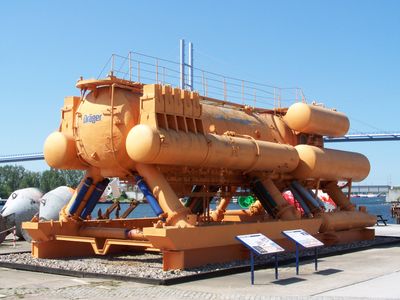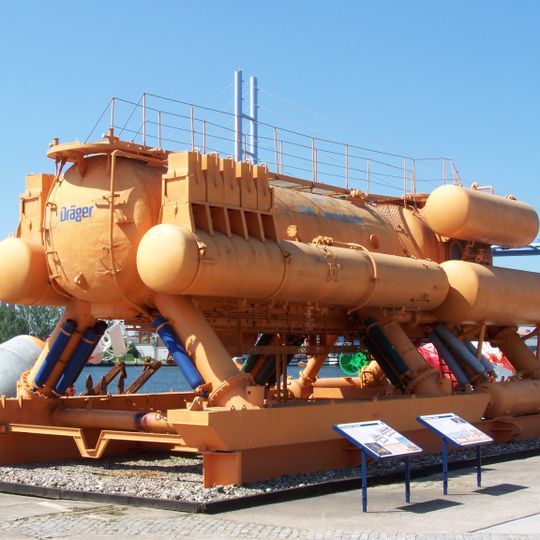
Helgoland Habitat, Underwater research station in Altefähr, Germany.
Helgoland Habitat is an underwater research station in Altefähr, Germany, made up of connected pressurized chambers installed at around 115 feet (35 meters) below the surface. It included living quarters, a scientific laboratory, and a wet lab section where water samples could be analyzed without leaving the pressurized environment.
The station was built by Dräger in Lübeck in 1968 as a cold-water research facility for long-term studies in the Baltic Sea. It allowed scientists to remain on the seafloor for several weeks at a time and carry out continuous observations.
The site reflects German engineering ambition through advanced pressure systems and specialized marine research equipment. It embodies the drive to push boundaries in underwater exploration and conduct long-term observations of ocean life.
Reaching the station requires specialized diving experience and careful decompression planning given its depth. Access is limited to trained professionals, as the setting demands a high level of technical preparation.
Despite its name suggesting a connection to the island of Helgoland, the station was actually deployed in the waters off Altefähr on the island of Rügen, far from the North Sea. The name reflects earlier planning stages when a different location had been considered for the project.
The community of curious travelers
AroundUs brings together thousands of curated places, local tips, and hidden gems, enriched daily by 90,934 contributors worldwide.