Hofgut Gassenbach, Estate and cultural monument in Idstein, Germany
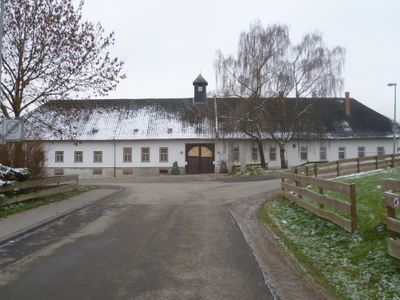
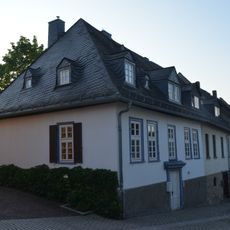
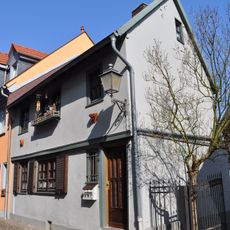
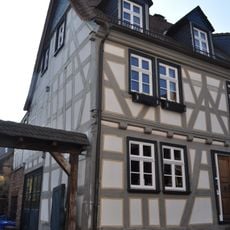
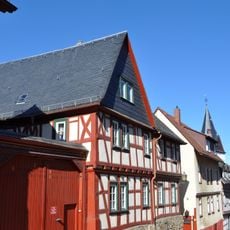
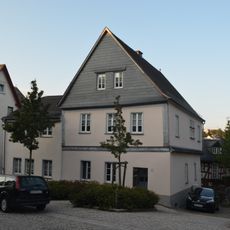
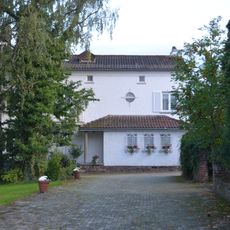
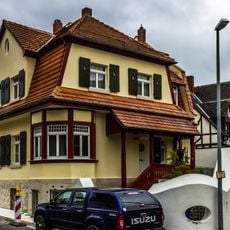
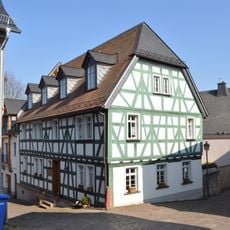
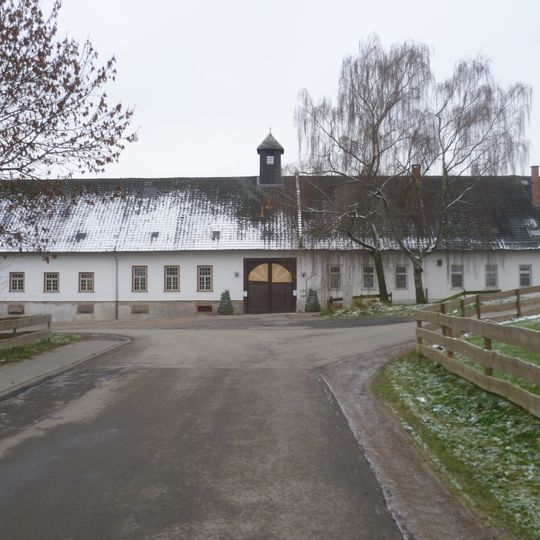
Hofgut Gassenbach is a farmstead on the southern edge of Idstein whose former four-sided layout is now only partly visible. The former farmhouse, rebuilt in 1811/1812 in pisé (rammed earth) to plans by Johann Christian Zais, occupies one narrow side. To the west stand barns and stables with pointed barrel roofs, mostly built in 1923 to replace four barns destroyed by fire; the northern barn dates from the 19th century and has been heavily altered. An old weather vane sits on the fire wall.
The estate grew out of the abandoned village of Gassenbach, first mentioned in 1316, and was enlarged by builder August Rumpf in 1662. Around 1812, on the initiative of government councillor Karl Ibell, a model farm was set up here together with the Idstein agricultural school, which opened in 1818 under director Wilhelm Albrecht to test and spread new farming methods.
The estate serves as a workplace for people with disabilities who work in the agricultural operations and workshops of Kalmenhof. This combination of farming and social support shapes the daily rhythm of the place and its role within the regional community.
The site is located on the southern edge of Idstein and is best reached on foot or by bicycle. Visitors should know that this is an active working estate where not all areas are freely accessible.
The farmhouse was rebuilt in 1811/1812 as a pisé (rammed earth) building to plans by building inspector Johann Christian Zais. The western barns and stables with barrel-vaulted roofs mostly date from 1923, when they replaced four barns destroyed by fire; an old weather vane survives on the fire wall.
The community of curious travelers
AroundUs brings together thousands of curated places, local tips, and hidden gems, enriched daily by 93,841 contributors worldwide.