Hinüberscher Garten, English landscape garden in Marienwerder, Germany
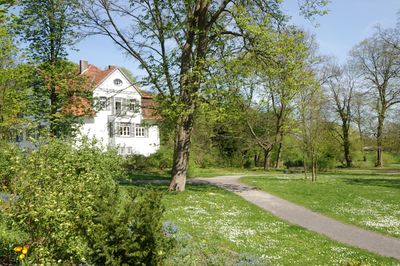
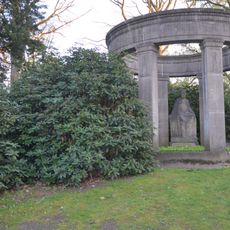
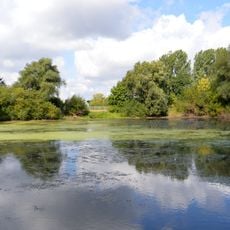
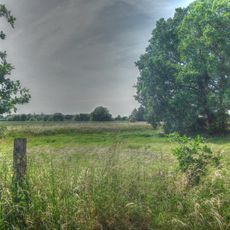
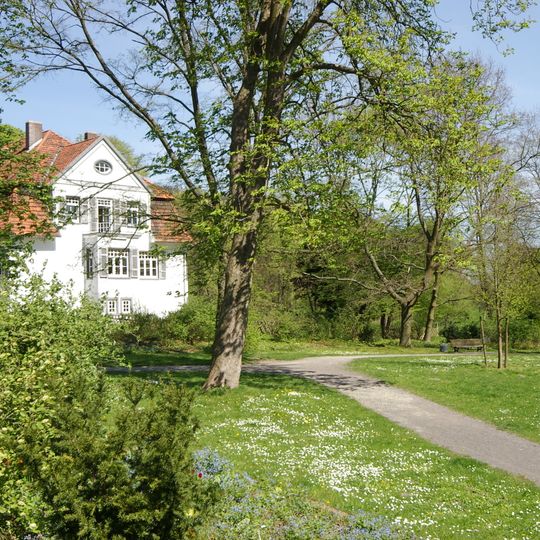
Hinüberscher Garden is a landscaped park in Herrenhausen-Stöcken that combines natural areas with open fields. It features walking paths through woodland, a pond, meadows, and several historic structures scattered throughout the grounds.
The garden was designed in 1766 by Jobst Anton von Hinüber following English landscaping principles. It ranks among the earliest gardens of this type in Germany and reflects how this style influenced the region.
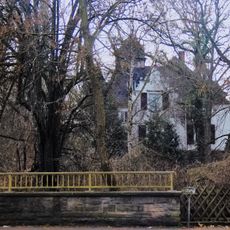
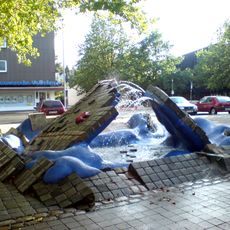
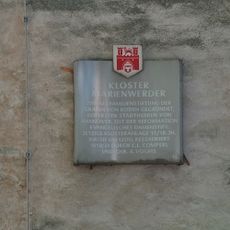
The garden's name recalls Jobst Anton von Hinüber, abbot's administrator at Marienwerder from 1760, who began laying out the park around 1766 after a study trip to English gardens in 1766/67. A corner of his demolished administrator's house is reproduced with a memorial plaque donated by the von Hinüber family. The pond's flower island was the garden's first attraction, once accompanied by a grotto and possibly a model Venetian gondola.
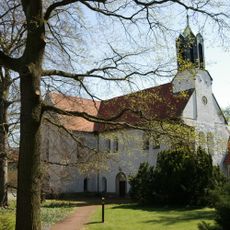
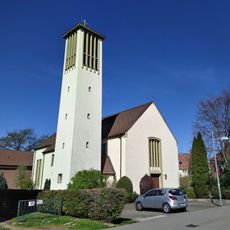
The Green Ring hiking and cycling trail crosses the garden. The park entrance is north of Marienwerder Abbey, where a lawn framed by shrubs marks the site of the former bailiff's house; a corner of the house is reproduced with a memorial plaque. Paths lead to the pond, the Quantelholz wood and the Hexenturm, which offers views over the park and surroundings.
The Hexenturm is an artificial ruin, a folly placed on a dune so that walkers see it framed like a 17th- or 18th-century landscape painting. It may have been built from remains of a monastery wing demolished in 1724, and a sketch of a comparable English building is in Jobst Anton von Hinüber's diary.
The community of curious travelers
AroundUs brings together thousands of curated places, local tips, and hidden gems, enriched daily by 93,943 contributors worldwide.