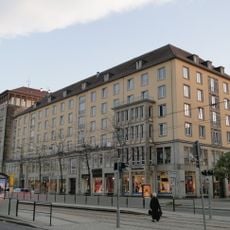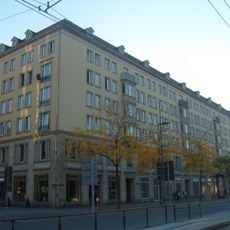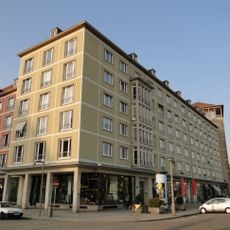
Landhaus, Baroque secular building in Dresden, Germany
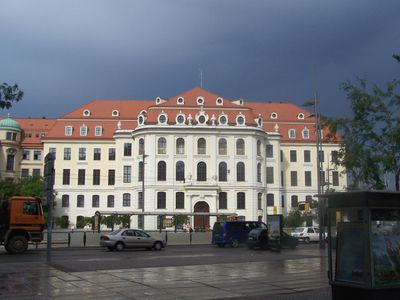
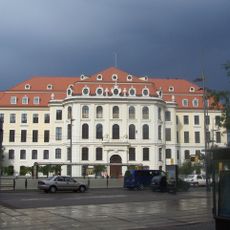
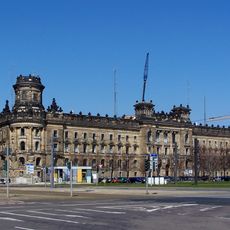
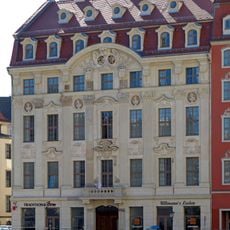
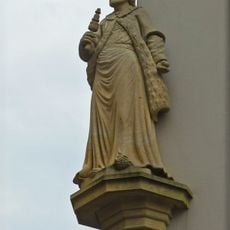
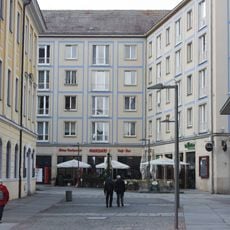
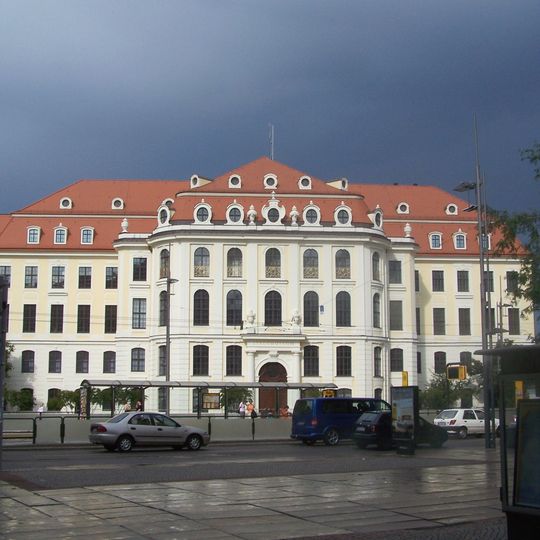
The Landhaus is a baroque civic building from the 18th century, located at Pirnaischer Platz in Dresden, with a symmetrical facade and ornate stone details typical of German Baroque design. It stands at the corner of Wilsdruffer Straße and Landhausstraße, making it easy to spot from the street.
The Landhaus was built from 1770 to 1776 at the Pirna Gate on the site of the former Palais Flemming-Sulkowski, following a counter-design by Count Ludwig Siegfried Vitzthum von Eckstädt; execution was led by Friedrich August Krubsacius and his pupil Höltzer. It served as the assembly house of the Saxon Landstände from 1776 to 1909, and from 1831 housed the two-chamber Ständeversammlung. The building was destroyed in the Second World War, with only the outer shell surviving, and was rebuilt between 1962 and 1965.
The building now houses the Dresden City Museum and the Municipal Art Gallery, where visitors can see paintings, objects, and documents about the city's past. The rooms give a direct sense of how life in Dresden changed over the centuries.
The building is easy to reach on foot from Dresden's city center and sits close to other points of interest in the area. It is worth checking the museum's opening days in advance, as not all areas may be accessible every day.
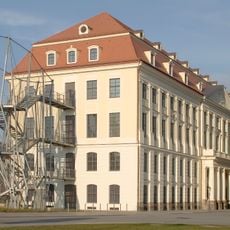
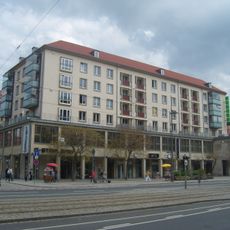
The deconstructivist fire escape added in 2005–2006 sits on the gable wall facing Pirnaischer Platz and is unrelated to the eastern wing, which was lost when Wilsdruffer Straße was widened into a main artery. The wing's removal also sent the front garden's large gate to the Barockgarten Großsedlitz. The steel structure remains controversial in Dresden.
The community of curious travelers
AroundUs brings together thousands of curated places, local tips, and hidden gems, enriched daily by 94,420 contributors worldwide.