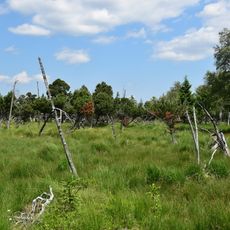
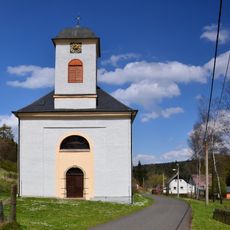
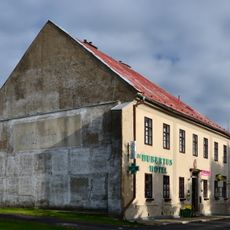
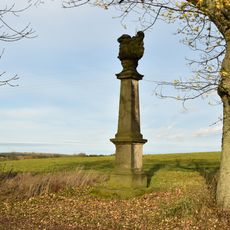
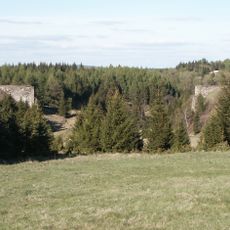
Hirtstein, National Geotope in Marienberg, Germany.
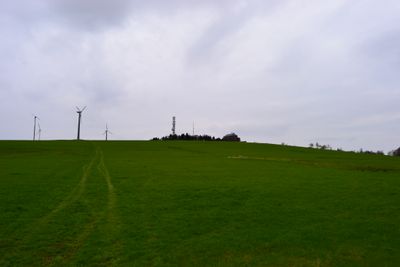
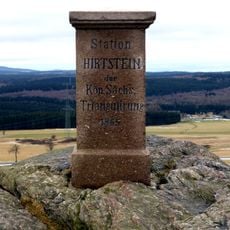
Hirtstein is a mountain summit and geotope in the Ore Mountains near Marienberg, Saxony, known for its exposed basalt rock formations at the top. The peak sits close to the Czech border and stands out clearly above the surrounding forested slopes.
In the 19th century, geologists recognized the scientific value of the basalt formations and pushed to protect them from quarrying. This effort laid the ground for the site's status as a protected natural monument, which it holds today.
The Hirtsteinbaude on the summit was built by the Satzung branch of the Erzgebirgsverein and opened as a shelter house on 17 December 1926; its ceremonial consecration followed on 11 September 1927, at a cost of around 30,000 Reichsmark. Today it serves walkers and skiers on the Kammweg Erzgebirge-Vogtland and the Skimagistrale Erzgebirge/Krušné hory.
In winter the area is used for cross-country skiing and downhill runs, while in summer marked hiking trails lead through the surrounding forest to the top. The inn at the summit makes a good stopping point before walking over to see the rock formations up close.
The rock at the summit is not phonolite but clinopyroxene-melanephelinite, a dark volcanic rock. The fan shape formed when lava stalled underground about 25 million years ago and cooled into a dome. Quarrying later exposed the radiating columns, and in 2006 the site was named one of Germany's 77 national geotopes.
The community of curious travelers
AroundUs brings together thousands of curated places, local tips, and hidden gems, enriched daily by 93,849 contributors worldwide.