Windloch, Pit cave in Hartenstein, Germany
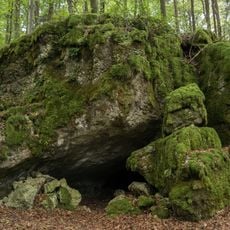
The Windloch is a karst cave on the eastern slope of the Lohhügel near Großmeinfeld. Its entrance is an eight-metre-deep collapse doline 15 metres across that drops steeply and overhangs abruptly. Inside, a shaft chamber measures 20 metres in diameter and 35 metres in height, with walls largely coated in sinter and made very wet by dripping water.
The cave has been known since around 1900. In 1928 the Nuremberg speleologist Richard Erl explored it and found various bones, including remains of human skeletons; further finds suggest it was visited repeatedly from the Hallstatt period to the present. Around 1930 Richard Spöcker produced its topographic cave map. The cave belongs to the Naturhistorische Gesellschaft Nürnberg.
The cave has been visited from the Hallstatt period to the present, as finds suggest. Nuremberg spelunker Richard Erl explored it in 1928 and found human skeleton remains among various bones. The Naturhistorische Gesellschaft Nürnberg owns the cave, and a fence and information board protect the sinkhole from careless entry.
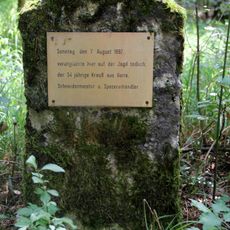
The cave is open all year but must not be entered from October to April because of hibernating bats. Access is via hiking trails, best from Großmeinfeld. The sinkhole is fenced and has an information board; only very experienced cavers with proper equipment should enter, as fatal accidents have occurred.
The cave's owner is the Naturhistorische Gesellschaft Nürnberg, a Nuremberg natural history society. Its entrance sinkhole was fenced and fitted with an information board to stop unwary walkers from stepping in, and the cave has repeatedly seen fatal accidents.
The community of curious travelers
AroundUs brings together thousands of curated places, local tips, and hidden gems, enriched daily by 93,819 contributors worldwide.