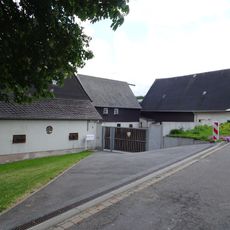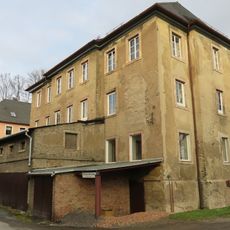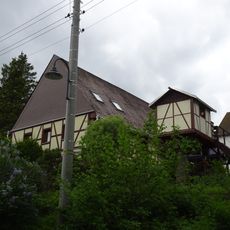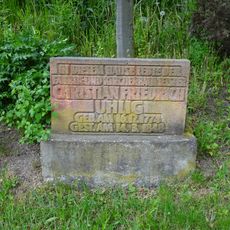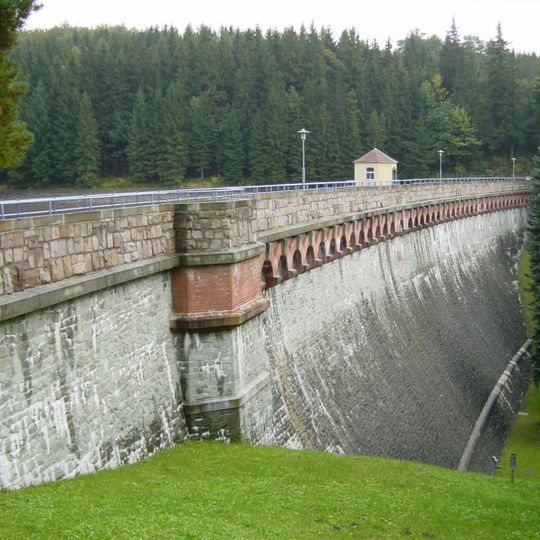
Einsiedel Dam, Cultural heritage dam in Einsiedel, Germany.
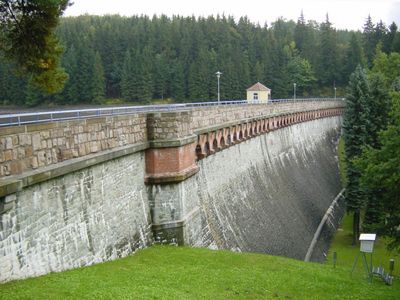
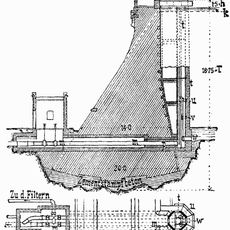
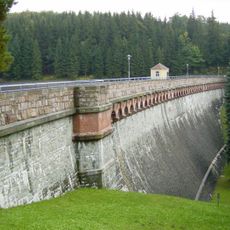
Einsiedel Dam is a curved structure built from stone and mortar that holds back a large reservoir. Water stored here flows through underground pipes to supply the nearby city.
Chemnitz passed 100,000 inhabitants in May 1883, and its 1872–1874 waterworks could no longer meet demand. The city therefore switched from ground to surface water. The foundation stone was laid on 7 November 1890 and the dam was inaugurated on 14 June 1894, costing 1.3 million marks and employing an average of 142 workers.
The dam embodies engineering skill from a time when the region was growing rapidly and water was precious. It shows how people solved major technical challenges to supply their cities with drinking water.
The dam lies in the Stadtguttal valley below Einsiedel, south of Chemnitz. The reservoir is a drinking water source, so swimming, fishing and water sports are not allowed; visitors are limited to viewing the masonry wall and the impounded Stadtguttalbach from outside. Water from the Neunzehnhain I reservoir is also diverted into it.
The council of Einsiedel, the village below the planned dam, formally objected to the Stadtguttal site, citing the 1889 South Fork Dam collapse in the United States that killed about 2,200 people. The objection failed and the dam was built anyway. The structure later received awards at the Paris 1900 and St. Louis 1904 world's fairs.
The community of curious travelers
AroundUs brings together thousands of curated places, local tips, and hidden gems, enriched daily by 95,021 contributors worldwide.